
 |
Hello everyone! Here is a compiled list of historical records and archaeological insights regarding the attire, lifestyle, and culture of Mahan (마한)—one of the ancient Samhan confederacies of Korea. This is a great resource for anyone researching early Korean clothing (Hanbok) and lifestyle! Hairstyle (머리 스타일) English: Men wore a distinctive hairstyle described as Gwaedu (魁頭), arranging their exposed hair into a large, rounded topknot or mallet-shaped coiffure. Unmarried women wore their hair braided. Hanja: 其男子或髮露紒 … 其爲魁頭 Source: 《三國志》 魏書 烏丸鮮卑東夷傳 / 《後漢書》 東夷列傳 Ornaments & Jewelry (장식) English: Mahan people highly prized jade earrings and necklaces, and even sewed beads onto their clothing for decoration. They did not value gold, silver, or embroidered silk as much as jade. (This is heavily backed by modern excavations where thousands of jade and glass beads are found in Mahan tombs). Hanja: 珍貴璣珠,或綴衣爲飾,或懸頸垂耳,不貴金銀錦綉。 Source: 《三國志》 魏書 烏丸鮮卑東夷傳 Footwear (신발) English: Records show they wore leather shoes (Hyeokgyo, 革蹻) and straw shoes, indicating an advanced leather-working culture alongside woven footwear. Hanja: 或履革蹻 Source: 《後漢書》 東夷列傳 Hats & Headgear (모자) English: Mahan people wore unique conical hats resembling the traditional Korean Goggal. Their neighbors in Jinhan and Byeonhan also wore similar conical headwear. (Archaeological digs in Mahan territories have successfully unearthed remnants of these woven or leather conical hats). Hanja: 其冠如魁頭,如冠幘。 Source: 《三國志》 魏書 烏丸鮮卑東夷傳 Textiles & Attire (복식) English: They enjoyed cultivating hemp and ramie (fine hemp) to weave fabrics for their clothing, demonstrating an early proficiency in high-quality textile production. Hanja: 蠶桑緝績,知作綿布。 Source: 《三國志》 魏書 烏丸鮮卑東夷傳 Sodo, Drums, and Bells (소도 북과 방울) English: Mahan maintained sacred districts called Sodo, where they erected giant wooden poles and hung bells and drums to worship heavenly spirits. Hanja: 諸國各有別邑,名之爲蘇塗。立大木,懸鈴鼓,事鬼神。 Source: 《三國志》 魏書 烏丸鮮卑東夷傳 Bird Imagery & The Origin of Sotdae (새와 솟대) English: While Chinese texts only mention “erecting a large pole” at Sodo, archaeological and folklore links strongly suggest bird figures (Sotdae) were placed on top. This is proven by the Bronze Age “Farming Bronze Plaque” depicting birds perched on trees, bird-shaped bronze artifacts, and similarities with North Asian shamanic poles and Joseon-era Sotdae. Hanja: (Archaeological & Folkloric Connection to Sodo [蘇塗]) Source: Gwangju Sinchang-dong Mahan Artifacts / Korean Folkloric Tradition (광주 신창동 유적 및 민속학 전승) Bird Feathers in Burials (새깃털) English: They used large bird feathers during funerals, believing that the feathers would help the wings of the deceased fly safely into the afterlife. Hanja: 以大鳥羽送死,其意欲使死者飛揚。 Source: 《三國志》 魏書 烏丸鮮卑東夷傳 Oxen and Horses in Agriculture (소와 말의 농사 이용) English: Oxen and horses were kept and utilized for agricultural labor and farming. Hanja: 有牛馬 Source: 《三國志》 魏書 烏丸鮮卑東夷傳 Horses as Heavenly Sacrifices (말의 제물 사용) English: Horses were treated with great reverence and were used as sacred sacrifices for the deceased and heavenly spirits. Hanja: 盡於送死 Source: 《三國志》 魏書 烏丸鮮卑東夷傳 Refuting the Claim “They Couldn’t Ride Horses” (말을 타지 못했다는 기록에 대한 반박) English: Chinese texts from the 2nd century AD claim Mahan people “had horses but did not know how to ride them.” However, historians note that while early Mahan sites from around the 2nd century primarily yielded horse-related fittings such as belt ornaments, advanced full horse tack sets—including iron bits, stirrups, and saddles—were extensively excavated from later Mahan tombs dating to the 4th–6th centuries (late Mahan period). Furthermore, neighboring Jinhan and Byeonhan were recorded as avid horse riders, making it clear that Mahan elites possessed riding capabilities that evolved over time. Hanja: 有牛馬,不知乘 (Note: While early 2nd-century records mention they “did not know how to ride,” and early relics mainly consist of horse belt ornaments, modern archaeology reveals rich full horse tacks—such as stirrups, bits, and saddles—in 4th–6th century late Mahan tombs). Source: 《三國志》 魏書 烏丸鮮卑東夷傳 / 마한 고고학 발굴 보고서 (4~6세기 마구 세트 출토) Traditional Dwellings / Pit Houses (움집) English: Their traditional houses were earthen pit dwellings (Umjib) shaped like burial mounds, with an opening or door built at the top. Hanja: 居處作土室,形如塚,開戶在上。 Source: 《三國志》 魏書 烏丸鮮卑東夷傳 Elevated Granaries (고상창고) English: They built unique, elevated wooden granaries (Gosang-changgo) to store grains safely away from moisture and pests. Hanja: 其俗作檁棧,形似牢獄。 Source: 《三國志》 魏書 烏丸鮮卑東夷傳 Military Alliance with Goguryeo (고구려와의 연합 기병 기록) English: In 121 AD, Mahan and Yemaek sent 10,000 cavalry troops to ally with Goguryeo’s King Taejo to attack the Chinese Han Dynasty’s Xuantu Commandery. While some mainstream narratives claim Baekje absorbed Mahan early on, this record—and the fact that Mahan political entities survived until the 6th century—proves Mahan maintained a powerful independent military force long after Baekje’s initial rise. Hanja: 秋八月 王與馬韓 濊貊 領一萬餘騎 進圍玄菟城 (King Taejo of Goguryeo, along with Mahan and Yemaek, led over 10,000 cavalry to besiege Xuantu.) Source: 《三國史記》 卷第十五 高句麗本기 第三 太祖大王 Weapons (무기) English: Their military arsenal included shields, spears, swords, and bows, which were noted to be structurally similar to those used in Central China. Hanja: 兵器與中國略同 / 步戰,兵仗與馬韓同 Source: 《三國志》 魏書 烏丸鮮卑東夷傳 Stature & Physique (체형) English: Historical texts specifically note that the people of the Mahan confederacies had a large and tall physical stature. Hanja: 其人體大 / 其人長大 Source: 《後漢書》 東夷列傳 submitted by /u/Both-Wonder-3955 |
Related Posts
Latest News from Korea
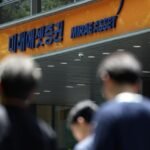
- Mirae Asset poised to reclaim brokerage crown from Korea Investment & Securities
 Mirae Asset Securities took the lead in the brokerage industry’s earnings race in the first half of the year, with net profit exceeding that of Korea Investment & Securities by more than 1 trillion won ($706.5 million), according to industry officials, Thursday. If the lead holds through year-end, Mirae Asset Securities will reclaim the industry’s top spot in annual net… Read more: Mirae Asset poised to reclaim brokerage crown from Korea Investment & Securities
 - Seoul City Hall exhibition explores fleeting memory of urban landscapesSeoul is hosting a compelling new art exhibition that examines the lingering memories and subtle traces left behind by residents in a rapidly evolving metropolitan landscape. “Traces of Seoul,” a solo exhibition by artist Chang Eun-woo, runs from Aug. 13 through Nov. 2 at the Sky Plaza Gallery, located on the eighth floor of Seoul City Hall. Overlooking the bustling… Read more: Seoul City Hall exhibition explores fleeting memory of urban landscapes
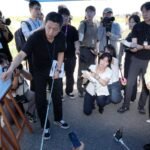
- PM visits Jeju Air crash site, seeks to comfort bereaved familiesPrime Minister Han Seong-sook on Thursday visited the site of a 2024 plane crash and sought to comfort bereaved families of the 179 victims amid delays in recovering the remains and determining what exactly led to the crash and who is responsible. “I am truly sorry and heavy hearted to see you all here,” Han said during a meeting with… Read more: PM visits Jeju Air crash site, seeks to comfort bereaved families
- Lee’s approval rating hits record low since inauguration: pollPresident Lee Jae Myung’s approval rating fell to the lowest level since his inauguration, a poll showed Thursday. In a National Barometer Survey (NBS) conducted from Monday to Wednesday, Lee’s approval rating stood at 49 percent, down 4 percentage points from the previous poll conducted two weeks earlier. It marks the first time his approval rating fell below 50 percent… Read more: Lee’s approval rating hits record low since inauguration: poll
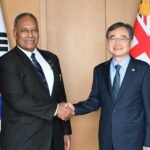
- Top diplomats of Korea, Fiji meet in Seoul for talks on energy cooperation, mutual tiesForeign ministers of Korea and Fiji held talks in Seoul on Thursday, seeking ways to strengthen bilateral ties and discussing energy supply chains and other areas of mutual interest, Seoul’s foreign ministry said. Foreign Minister Cho Hyun met his Fijian counterpart, Sakiasi Ditoka, who is currently visiting Korea. Ditoka’s visit comes as the two countries mark the 55th anniversary of… Read more: Top diplomats of Korea, Fiji meet in Seoul for talks on energy cooperation, mutual ties


Latest Entertainment from Korea
- LE’V Steps Into the Light: “Spotlight Soul” Captures the Artistry, Growth, and Glow of a New Era in the 2026 Season’s Greetings CollectionPhoto Credits: CHROMOSOME LE’V Illuminates 2026 with “Spotlight Soul” LE’V enters 2026 with a statement that feels both cinematic and deeply personal. His Season’s Greetings “Spotlight Soul” concept photos reveal a striking evolution — one that merges emotional depth with artistic clarity. The project, released as a collector’s visual experience, celebrates not just another year but LE’V’s firm grasp on identity, craft,… Read more: LE’V Steps Into the Light: “Spotlight Soul” Captures the Artistry, Growth, and Glow of a New Era in the 2026 Season’s Greetings Collection
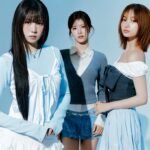
- KiiiKiii Leesol & Haum Illuminate SPUR x Dior Addict’s January 2026 Issue with Daring Light, Sensual Motion, and New Beauty CodesPhoto Credits: SPUR Dior Starship Entertainment A New Year, A New Iconic Pairing SPUR Magazine opens 2026 with a collaboration that feels both intimate and electric. The January 2026 Issue Pictorial Preview showcases KiiiKiii Leesol and Haum in a visual dialogue infused with Dior Addict’s luminous rebellion. Titled “Light Moves: The Addict State of Mind”, the spread captures the interplay of motion, reflection, and self-definition—a signal… Read more: KiiiKiii Leesol & Haum Illuminate SPUR x Dior Addict’s January 2026 Issue with Daring Light, Sensual Motion, and New Beauty Codes
- Breaking Boundaries: ifeye × KITTO Taiwan Redefine Visual Storytelling in the January 2026 Pictorial — A Fusion of Innovation & IdentityPhoto Credits: Hi-Hat Entertainment The Convergence of Vision and Identity The January 2026 Pictorial from ifeye × KITTO Taiwan marks a defining moment in East Asian creative media. Framed as both a celebration and an evolution, the collaboration bridges art direction, fashion narrative, and technological fluidity to capture a new generation’s pulse. More than a photoshoot, this issue acts as a visual manifesto—an exploration of… Read more: Breaking Boundaries: ifeye × KITTO Taiwan Redefine Visual Storytelling in the January 2026 Pictorial — A Fusion of Innovation & Identity
- Xiaoting in Full Bloom: Kep1er’s Shining Star Redefines Power, Grace, and Global Glamour in Wonderland China’s January 2026 Cover StoryPhoto Credits: KLAP ENTERTAINMENT Kep1er’s Xiaoting Captures the Moment Kep1er’s Shen Xiaoting steps into 2026 as a muse of modern elegance, fronting the January 2026 Wonderland China cover with an aura that’s both futuristic and fiercely grounded. As one of the brightest stars of her generation, Xiaoting embodies the balance between aspiration and artistry that defines global pop’s next chapter. “Confidence is not just… Read more: Xiaoting in Full Bloom: Kep1er’s Shining Star Redefines Power, Grace, and Global Glamour in Wonderland China’s January 2026 Cover Story
- BTS’s V Radiates Timeless Charisma in GQ Korea x Cartier’s February 2026 Cover: A Monument to Modern Elegance and Emotional PrecisionPhoto Credits: GQ Korea – Cartier – BigHit Music. – BTS V x Cartier: The Sound of Stillness and Strength For GQ Korea’s February 2026 issue, the cover unfolds like a cinematic confession. BTS’s V (Kim Taehyung)—known for his magnetic duality of mystery and warmth—joins forces with Cartier, the house synonymous with precision, artistry, and legacy. Together, they create a visual symphony that celebrates… Read more: BTS’s V Radiates Timeless Charisma in GQ Korea x Cartier’s February 2026 Cover: A Monument to Modern Elegance and Emotional Precision



Learn People & History of Korea
- The Evolution of Busan: A Historical Journey Through South Korea’s Second Largest Metropolitan CityAncient Beginnings: The Founding of Busan Busan, known as the second largest metropolitan city in South Korea, has a rich history that dates back to ancient times. The earliest recorded existence of Busan can be traced to the Goryeo Dynasty, where it was referenced as a vital coastal settlement. Its strategic location along the southeastern coast of the Korean Peninsula… Read more: The Evolution of Busan: A Historical Journey Through South Korea’s Second Largest Metropolitan City
- The Evolution of Pyongyang: A Journey Through History, Economy, and Political DynamicsIntroduction to Pyongyang Pyongyang, the capital city of North Korea, serves as a prominent symbol of the nation’s history and culture. Geographically located on the banks of the Taedong River, in the southwest part of the country, Pyongyang is situated within a strategic area that has historically facilitated trade and cultural exchange. The city’s origins can be traced back to… Read more: The Evolution of Pyongyang: A Journey Through History, Economy, and Political Dynamics
- The Evolution of Seoul: From Ancient Korea to Modern Metropolis and BeyondAncient Beginnings: The Founding of Seoul The city of Seoul, known today as the vibrant capital of South Korea, has ancient roots that trace back to the Three Kingdoms period of Korea, specifically the kingdoms of Baekje and Silla. Evidence suggests that Seoul was originally established as a settlement given its strategic geographical advantages. Nestled within the Han River basin,… Read more: The Evolution of Seoul: From Ancient Korea to Modern Metropolis and Beyond
- Exploring Korean Traditional Games in Squid Game: From Season 2 to Upcoming Season 3Introduction to Korean Traditional Games Korean traditional games have long been an integral part of the country’s cultural landscape, offering more than mere entertainment. These games, which range from simple children’s pastimes to complex community activities, hold significant cultural significance and often serve as a means of preserving history and promoting social interaction. Rooted in centuries of tradition, these games… Read more: Exploring Korean Traditional Games in Squid Game: From Season 2 to Upcoming Season 3
- Unveiling the Past and Present of Saju: The Art of Korean Fortune TellingIntroduction to Saju Saju, a traditional Korean fortune-telling practice, is an intricate art that seeks to interpret an individual’s fate based on their birth date and time. The term “Saju” translates to “four pillars” in English, referring to the four critical components derived from these time markers: year, month, day, and hour. This method holds significant cultural value within South… Read more: Unveiling the Past and Present of Saju: The Art of Korean Fortune Telling



![[link]](https://i.redd.it/0z3rtcd4oyih1.png)