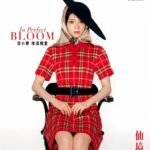
If we analyze this in depth beyond whether K-pop is enjoyable or whether the entire South Korean K-pop scene is noteworthy it’s clear that the K-pop industry realized that, on a global scale, people were losing their faith in God and feeling increasingly empty. From a marketing perspective, the industry saw a huge opportunity, which is why K-pop artists are marketed by the K-pop music industry as perfect, god-like idols In this way, people seek to fill their existential voids by consuming K-pop, with the aim of fostering a parasocial relationship of dependence among K-pop fans.
For example, someone who isn’t in a romantic relationship might take refuge in K-pop, placing K-pop artists on a pedestal; and in some cases, once they find a partner, they lose interest in those artists. Thus, people who feel empty inside take refuge in K-pop artists, viewing them as gods, since from the very beginning they’re sold the idea that these idols are highly attractive beings essentially super-beautiful, scantily clad dolls designed to entertain people. In this way, people continue to consume K-pop products albums, photocards, concerts, all kinds of merchandise. It’s basically the K-pop music industry’s strategy to create a character that’s extremely appealing to people so that, once they’re hooked, the industry can profit from them.
So, in reality, K-pop artists are just employees working for a company that generally doesn’t pay them well, where their lives are highly controlled; they’re just human beings living their lives, dealing with issues, and doing their jobs. Therefore, what we see of K-pop artists is just a persona most K-pop artists don’t act the way they’re usually portrayed in public on a daily basis, and they mostly lead unhappy lives where they’re recruited by K-pop industry companies to be exploited from a young age, taking advantage of their youth and physical attractiveness, which is profitable for selling a sexualized image to the public. To be honest, we’re already whole; we already have everything we need within us to be happy. When we’re aware of all this, we enjoy K-pop not as a product of impulsive consumption where even the lyrics are often pure marketing, but as the beautiful art that it is valuing the artist as a person, loving their essence, and not buying into the hyper-inflated image that the K-pop music industry often sells. (:
submitted by /u/External_Yogurt
[link] [comments]