GAITHERSBURG, MD – The US state of Maryland is setting up a $100 million venture fund to invest in South Korean biotechnology and healthcare companies, underscoring the state’s effort to expand cross-border partnerships in life sciences.
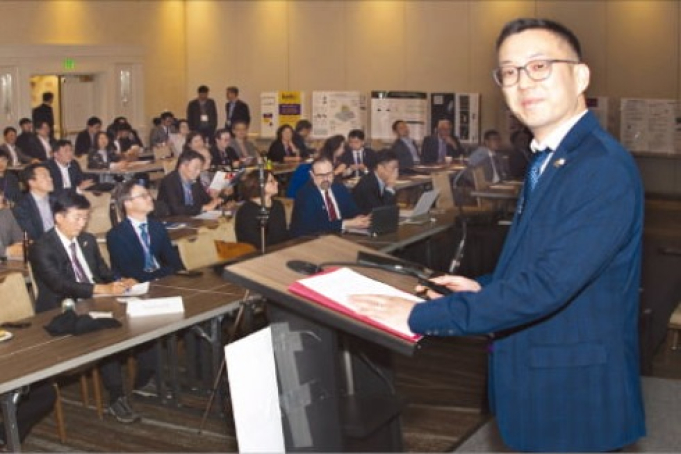
The plan was announced by Troy A. LeMaile-Stovall, chief executive of the Maryland Technology Development Corporation (TEDCO), during the annual conference of the Korean-American Professional Association in Life Sciences (KAPAL), or the KAPAL Bio Forum, held in Gaithersburg last week.
The new fund, dubbed Opportunity Fund, will raise capital from federal and state resources, pension funds, family offices and banks, and is expected to make its first investments in the second half of next year, said LeMaile-Stovall.
TEDCO, a Maryland state-backed funding agency, supports the US state’s startup ecosystem by financing and mentoring early-stage technology and life-science companies.

The upcoming fund will focus primarily on Korean biotech firms that already operate in Maryland or plan to establish offices there, as well as US companies pursuing partnerships or expansion in Korea.
It will be the first state-run US venture fund dedicated mainly to Korean biotech investments, said the TEDCO CEO, expecting strong synergy between Korea’s advanced biopharmaceutical manufacturing and cost-efficient production and the state’s world-class research infrastructure and regulatory institutions.
Korea is home to some of the world’s leading biotech players, including Samsung Biologics Co., the largest contract development and manufacturing organization (CDMO) with a total production capacity of 784,000 liters, and Celltrion Inc., a major biosimilar developer.
MORE INVESTMENT PLANS IN THE PIPELINE
Maryland hosts one of the nation’s leading biotech clusters, also home to the US Food and Drug Administration (FDA), the National Institutes of Health (NIH) and the Johns Hopkins Hospital.

Several Korean firms, including Kolon TissueGene Inc., Hanall Biopharma Co., DND Pharmatech Inc., Neoimmunetech Inc., Psomagen Inc. and STCube Inc., already maintain local offices in the state.
Global venture capital firms, such as Curie.Bio, Ecphora Capital, MEDA Ventures and One Way Ventures, also joined the KAPAL forum, exploring investment opportunities in Korean life-science companies.
One venture capital executive said the firm plans to unveil an investment program for Korean biotech and healthcare firms later this year.
RESEARCH COLLABORATION ACCELERATES
At the event, Susan C. Lee, Maryland’s Secretary of State, said the state will deepen its scientific and economic cooperation with Korea regardless of shifting federal trade policies.
Joint research programs between the two countries are also expanding.

Since last year, Korea’s Ministry of Trade, Industry and Energy and the Korea Institute for Advancement of Technology (KIAT) have forged multiple partnerships with US universities, including Johns Hopkins University and Yale University, on biotechnology and semiconductor R&D initiatives.
Korea’s strengths in early-stage drug discovery and preclinical testing would complement the US edge in late-stage clinical trials, regulatory approval and commercialization, said Kim Deok-ho, an associate professor of biomedical engineering at Johns Hopkins University.
This alignment would further spur cross-border partnerships and investments between the two countries, industry experts said.
Roughly 60,000 Korean-American scientists and engineers now work in the US, serving as a bridge between the two nations’ life-science ecosystems.
The number of technology licensing and collaboration deals between Korean biotech firms and global pharmaceutical companies topped 10 for the first time last year, reflecting how years of professional exchange are maturing into tangible business ventures, said Park Ji-hoon, the KAPAL president.