
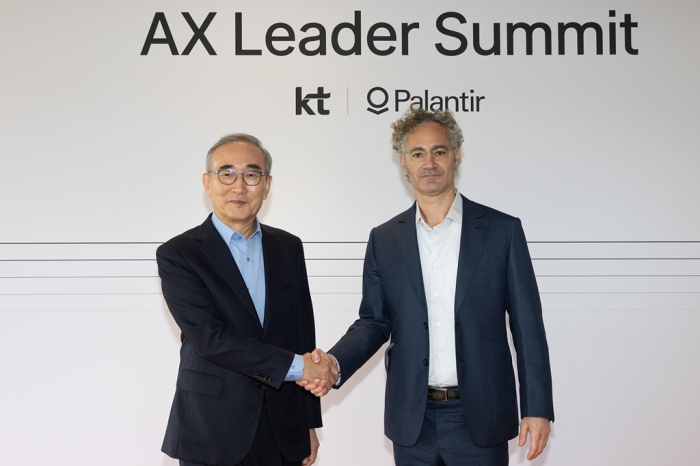
Alex Karp, chief executive of US data analytics giant Palantir Technologies Inc. on Tuesday held a string of tightly guarded meetings with chiefs of four major South Korean conglomerates, underscoring the US firm’s growing interest in one of Asia’s most data-rich manufacturing hubs.
The meetings, part of the “AX Leaders Summit” hosted by mobile carrier KT Corp. in Seoul, coincided with the visit of the Palantir CEO, who flew in for the event.
Karp handpicked the Korean participants for one-on-one discussions, each lasting about 25 minutes, according to people familiar with the matter.
The four Korean executives are Woo Kee-hong, vice chairman of Korean Air Lines Co., Kim Yong-beom, vice chairman of Meritz Financial Group Inc., Koo Ja-kyun, chairman of LS Electric Co. and Lee Joo-tae, chief executive of POSCO Holdings Inc.
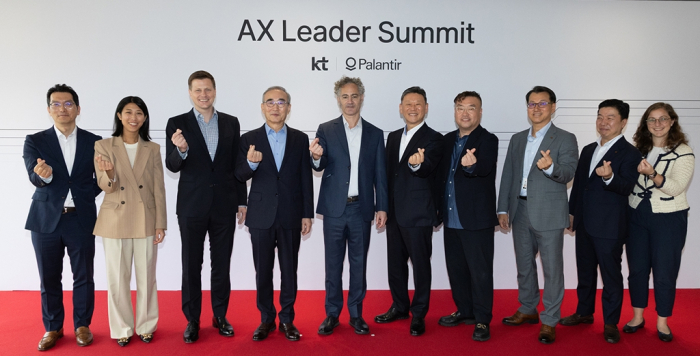
Unlike typical business forums, the meetings were held behind the curtain, with each Korean executive waiting in a separate room, sources said.
“Every meeting was kept secret to prevent exposure of each company’s AI transformation strategy. It was orchestrated with almost military discipline,” said a person familiar with the matter.
LS Electric’s Koo discussed with Karp issues related to AI-powered data centers and the Korean firm’s use of Palantir technology, sources said.
UNUSUAL STRUCTURE OF MEETINGS
The unusual structure of the meetings reflects Palantir’s approach to corporate collaboration – prioritizing discretion and tailored AI deployment strategies.
Sources said discussions centered on how companies could navigate the complex challenges of the next phase of AI-driven industrial efficiency, known as AI transformation, or AX.
Established by PayPal co-founder Peter Thiel, Nathan Gettings and others in 2003, Palantir is a software company that specializes in big data analytics.
Headquartered in Denver, Colorado, the company counts US intelligence agencies CIA and FBI as well as global companies such as Airbus and BP plc, among its major clients.
Touted as a “secret weapon” of the Trump administration for its data intelligence capabilities, Palantir’s secretive meetings with the Korean CEOs are seen as the US firm’s eagerness to enhance its presence in the Korean business-to-business (B2B) market.
“Palantir’s selection of companies across telecoms, finance, manufacturing, aviation and steel shows it’s looking for deep, cross-sector integration,” said an industry official. “Beyond KT, which already partners with Palantir, you can expect new alliances to form as Palantir expands its Korean footprint.”
SMART SHIPBUILDING DESIGN
Analysts said Palantir began to actively pursue overseas markets beyond the US with the inauguration of the second Trump administration.
For Palantir, whose technology powers data operations for governments and corporations globally, Korea’s complex industrial ecosystem presents both a challenge and a lucrative opportunity.
Its engagement with Korean companies is also expanding.
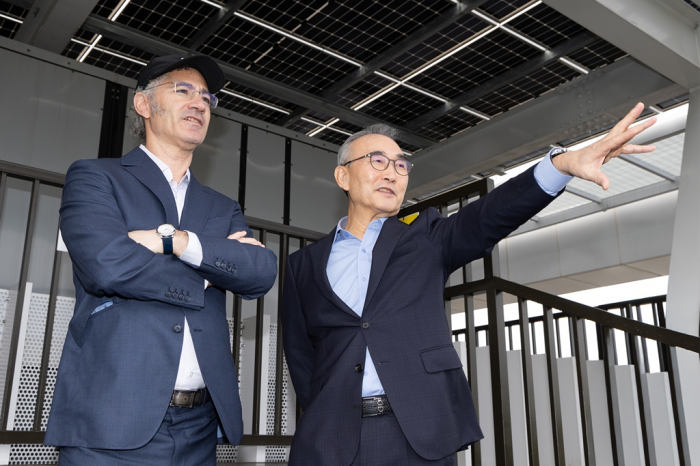
A prime example is its focus on smart shipyard design with HD Hyundai Co.
“For the MASGA project to succeed, building a new type of shipyard with minimal labor is essential,” said a shipbuilding industry official. “While Palantir is currently focusing on developing unmanned surface vehicles with HD Hyundai, it is likely to move forward with digital twins based on Korean shipbuilding data.”
If the US is to place orders for strategic assets such as warships with Korean shipbuilders, the involvement of security-focused AI solution companies like Palantir is essential, sources said.
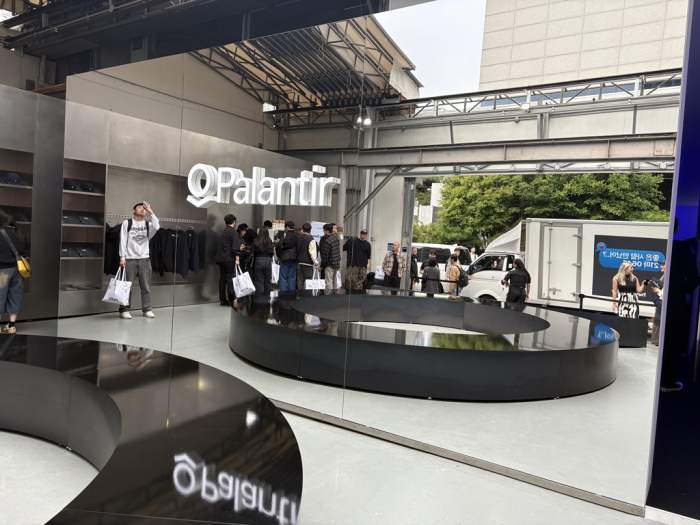
STRENGTHENED KT-PALANTIR PARTNERSHIP
KT and Palantir signed a strategic partnership in March and are jointly pursuing the AX project.
Through the partnership, KT became the first official member of Palantir’s Worldwide Partner Ecosystem in Korea.
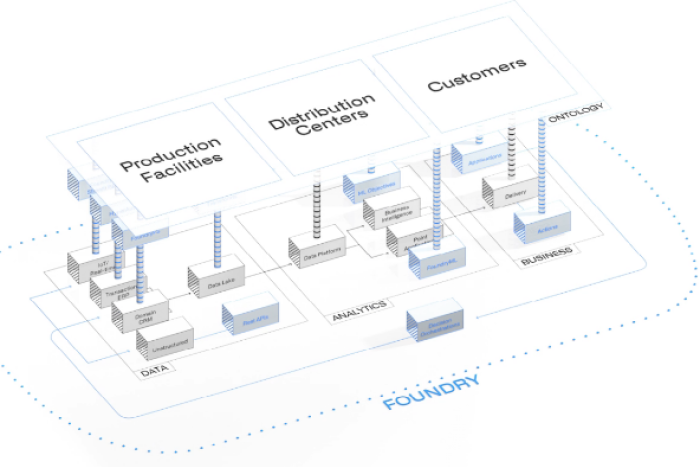
KT has established a cloud-based work environment and implemented Palantir’s Foundry and AIP platforms, both of which support efficient decision-making by analyzing corporate data with AI.
KT plans to offer these platforms to clients in the finance and public sectors.

The two companies have also jointly developed AI platform training programs, including the Korean AIP Bootcamp.
KT CEO Kim Young-shub said the two firms will collaborate on training to strengthen KT employees’ AI and data capabilities.
“The collaboration between KT and Palantir will serve as a successful example of driving AX innovation in key industries in Korea. We will support the spread of effective decision-making based on AI and data across various industries,” Kim said.
Karp said: “Our collaboration with KT is a key step forward toward enhanced security, cloud-based data utilization and industry-tailored innovation.”
By Ji-Hee Choi and Kyoung-Ju Kang
mymasaki@hankyung.com
In-Soo Nam edited this article.