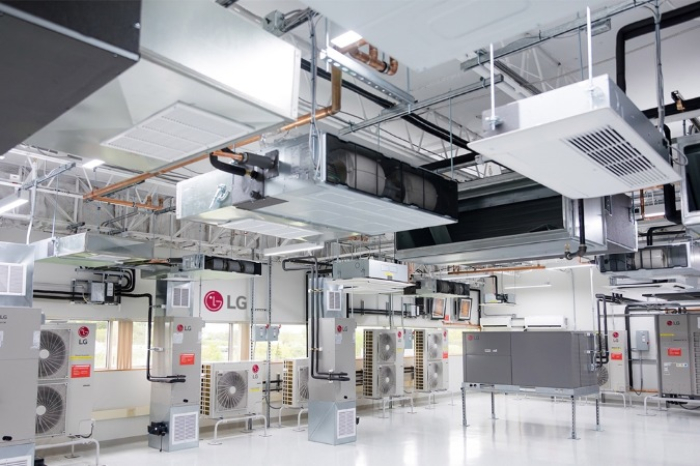
LG Electronics Inc., a leading South Korean home appliance maker, has emerged as one of the world’s top five players in the heating, ventilation and air conditioning (HVAC) market, driven by its focus on large-size chillers.
According to industry sources on Wednesday, LG ranked fifth in the global large-scale chiller market this year.
The milestone comes 13 years after the company acquired the chiller business from LS Mtron Co. in 2011. LG’s HVAC market share has more than doubled especially from 2017.
Industry officials said LG had gained traction in the competitive market, competing with bigger rivals such as top player Johnson Controls International plc of Ireland, Trane Technologies of the US, Daikin Industries Ltd. of Japan, and Carrier Global Corp. of the US.
DEMAND FROM AI DATA CENTERS
LG’s swift rise to global prominence is attributed to the recent surge in demand for large-scale air-cooled chillers, fueled by the growing use of artificial intelligence.
Air-cooled chillers, which use external air to generate cool air, have become a popular alternative to water-cooled systems that consume significant water for cooling, especially at AI data centers.
A key feature of LG’s chillers is their “oil-free magnetic bearing” technology, which the company independently developed and began mass production of chillers equipped with the technology in 2017.
LG is the only company worldwide applying this technology to large-scale air-cooled chillers. While competitors have focused on technology for smaller coolers, LG shifted at an early stage to large-scale applications, industry watchers said.
The LG technology allows the compressor motor’s rotating shaft inside the chiller to be levitated and supported in mid-air using electromagnetic forces, enabling it to rotate with minimal friction – a process similar to magnetic levitation trains, where electromagnetic forces lift the train off the tracks.
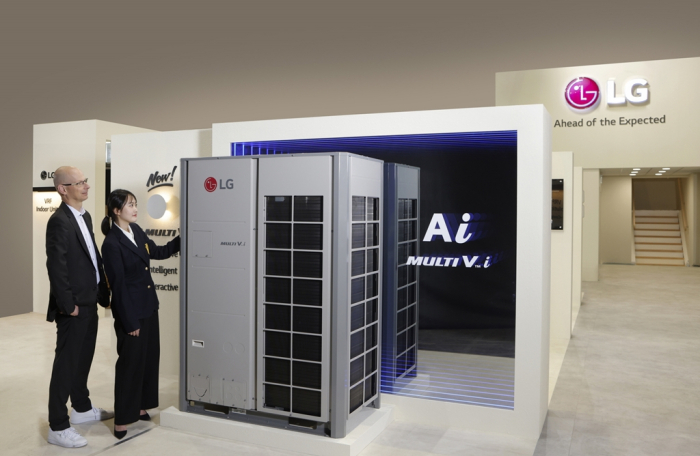
Compared to competitors’ oil-based bearings, LG’s approach significantly reduces noise, energy loss and maintenance costs, according to the company.
A company representative highlighted the efficiency of the chillers, stating, “Our chiller can cool a space of up to 99,000 square meters. Large-size products offer advantages in terms of space and energy efficiency, making them ideal for data centers and large buildings,” said an LG official.
LG AIMS TO FURTHER ENHANCE ITS HVAC MARKET PRESENCE
LG Electronics plans to aggressively expand its presence in the global cooling systems market, in line with growing demand for chillers.
According to global market research firm IBISWorld, the global HVAC market is forecast to grow to $61 billion by 2028 from $58.4 billion in 2023.
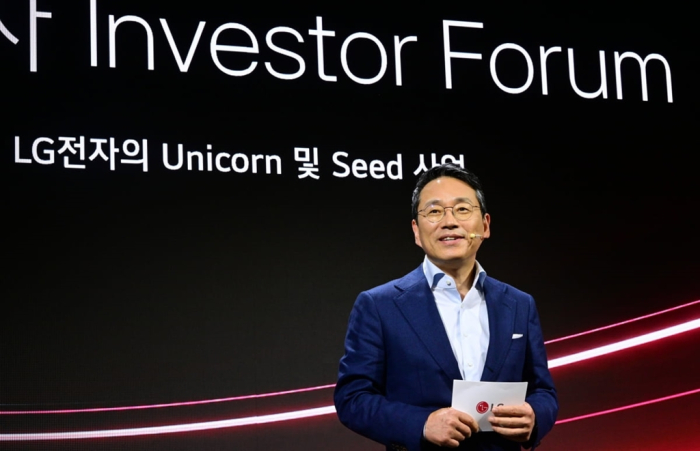
In August, Chief Executive Cho Joo-wan said LG plans to nurture new businesses that can each bring in more than 1 trillion won ($718 million) in annual revenue such as HVAC.
Cho, who also goes by his English name William Cho, said earlier this year the company is making a big B2B push with a focus on HVAC products.
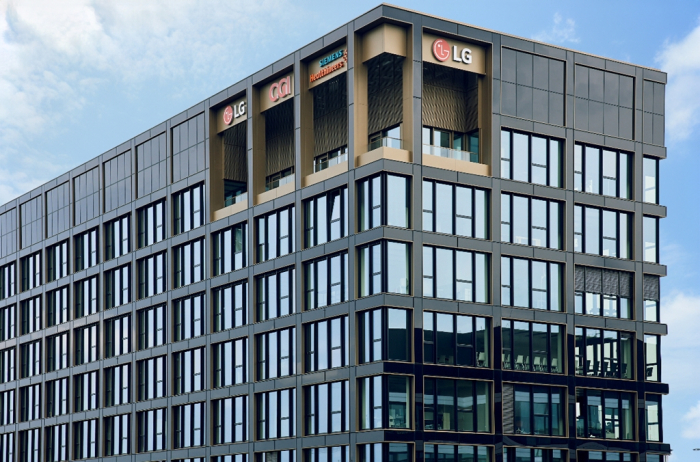
In July, LG set up an HVAC research center in Frankfurt to increase sales in Europe, one of the world’s biggest heating system markets.
Globally, LG operates a wide range of research and education programs to foster over 30,000 HVAC engineers annually in 43 countries. It has established the LG HVAC Academy, its training center, in 62 locations worldwide.
By Chae-Yeon Kim
Why29@hankyung.com
In-Soo Nam edited this article.