 |
Hunmin Jeongeum Haerye (訓民正音解例)A Complete Paraphrased English Translation for International ReadersI. PrefaceThe spoken language of our country is fundamentally different from that of China, and as a result, it cannot be properly written using Chinese characters. Because of this, many ordinary, uneducated people have thoughts they wish to express but are ultimately unable to convey their feelings in writing. Moved by pity for this situation, I have newly created a set of twenty-eight letters. My sole intention is to make these letters easy for everyone to learn and convenient for daily use. II. The Initial Consonants (자음)Each initial consonant is classified by where in the mouth it is produced (place of articulation) and compared to a familiar English sound. Velar Sounds (어금닛소리) — made at the back of the throat with the root of the tongue
Lingual Sounds (혓소리) — made with the tongue touching the upper gums
Labial Sounds (입시울소리) — made with the lips
Dental Sounds (닛소리) — made with the teeth
Laryngeal Sounds (목소리) — made in the throat
Semi-Lingual and Semi-Dental Sounds
III. The Medial Vowels (모음)Each vowel is described by how it sounds in English.
IV. Final Consonants and Writing Rules
V. Tone Marks (성조 표시)
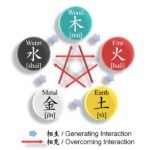
VI. The Philosophy Behind the Letters (제자해)A. The Cosmic Foundation of SoundThe fundamental principle governing Heaven and Earth is simply the interaction of Yin and Yang and the Five Elements. Between the hexagrams Kun (Earth) and Fu (Return) lies the Great Ultimate; and from the interplay of motion and stillness, Yin and Yang emerge. Every living being that exists between Heaven and Earth cannot escape this Yin-Yang dynamic. Therefore, all human speech and sounds inherently contain these principles — it is simply that people have not previously recognized this fact. Now, the creation of this new alphabet did not come about through elaborate human planning or forced intellectual effort. Rather, it was achieved by carefully following the natural sounds of our speech and exhaustively investigating the principles embedded within them. Since these principles are ultimately unified and non-dual, how could this alphabet not share the same cosmic power as Heaven, Earth, and the divine? B. How the Letters Were ShapedThe 28 letters of the Korean alphabet were each created by imitating the shape of the vocal organs used to produce them. There are seventeen initial consonant letters in total. What each letter imitates:
Adding strokes to create new sounds: The letter ㅋ is derived from ㄱ by adding a stroke, because its sound is more forceful (aspirated). In the same way:
In all these cases, the principle is the same: more strokes = a more forceful sound. The only exception is ㆁ (the velar nasal), which follows a different pattern. The semi-lingual letter ㄹ and the semi-dental letter ㅿ also imitate the shapes of the tongue and teeth, but they have their own distinct forms and do not follow the “added-stroke” principle. C. The Five Sounds and the Five ElementsHuman speech is rooted in the Five Elements. Each category of sound corresponds to a season, an element, a direction, and a musical tone. Laryngeal (Throat) — 喉音
Velar (Gum) — 牙音
Lingual (Tongue) — 舌音
Dental (Teeth) — 齒音
Labial (Lips) — 脣音
Why throat and tongue sounds are most important:
D. Clear and Murky Sounds (淸濁)Sounds are also classified by whether they are clear, murky, or neutral. Fully Clear (全淸) — Light, unvoiced, unaspirated sounds
Second Clear (次淸) — Strong, aspirated sounds
Fully Murky (全濁) — Tense, emphatic sounds
Neither Clear nor Murky (不淸不濁) — Soft, sonorous sounds
How doubling works: When a “Fully Clear” consonant is doubled (written side by side), it becomes a “Fully Murky” sound. For example:
E. The Medial Vowels and the Three Realms (天地人)The eleven medial vowels were created by imitating the shapes of Heaven, Earth, and Humanity. The three foundational vowels:
From these three, the other eight vowels are formed:
F. The Interaction of Initials and FinalsWhy finals reuse the same letters as initials: The dynamic, active principle that becomes Yang is Heaven; the static, passive principle that becomes Yin is also Heaven. Heaven truly divides into Yin and Yang and rules over everything without exception. The primal energy of the universe flows endlessly in cycles; the movement of the four seasons proceeds in an unbroken circle. Therefore, after completion comes renewal, and after winter comes spring. The fact that an initial sound can become a final, and a final sound can become an initial again, is precisely this same principle of cyclical return. VII. Concluding ExclamationAh! Now that the Correct Sounds have been created, all the principles of Heaven, Earth, and the countless things of creation are fully contained within them. How divinely profound and wonderful this is! Indeed, this must surely be the work of Heaven opening the sage-king’s mind and acting through his hand! Appendix: Quick Pronunciation Referenceㄱ — ‘g’ in go ㄲ — ‘gg’ in egg (tense) ㅋ — ‘k’ in kite (aspirated) ㆁ — ‘ng’ in sing ㄷ — ‘d’ in dog ㄸ — ‘dd’ in muddy (tense) ㅌ — ‘t’ in top (aspirated) ㄴ — ‘n’ in now ㅂ — ‘b’ in boy ㅃ — ‘bb’ in rubbish (tense) ㅍ — ‘p’ in pin (aspirated) ㅁ — ‘m’ in mother ㅈ — ‘j’ in jump ㅉ — ‘jj’ in edge (tense) ㅊ — ‘ch’ in chin (aspirated) ㅅ — ‘s’ in sun ㅆ — ‘ss’ in hiss (tense) ㆆ — catch in throat like uh-oh ㅎ — ‘h’ in hat ㅇ — silent at start; ‘ng’ at end ㄹ — ‘l’ in love (with a tap) ㅿ — soft ‘z’ like in azure ㆍ — ‘o’ in British hot ㅡ — ‘eu’ in French deux ㅣ — ‘ee’ in see ㅗ — ‘o’ in go ㅏ — ‘a’ in father ㅜ — ‘oo’ in moon ㅓ — ‘aw’ in saw ㅛ — ‘yo’ in yoga ㅑ — ‘ya’ in yarn ㅠ — ‘yu’ in you ㅕ — ‘yeo’ in yeoman submitted by /u/Plenty_Platform_8448 |
History : King Sejong the Great (1397–1450, r. 1418–1450) | Hunmin Jeongeum Haerye (1446) Born Yi Do (이도)
Related Posts
Latest News from Korea
- Ex-football player Park Joo-ho, wife Anna expecting 4th child
 Former football player Park Joo-ho and his wife, Anna, have announced that they are expecting their fourth child. On Thursday, Anna uploaded a video titled “Starting Again” to her YouTube channel With ANNA. The video marked her return to the channel after a four-month hiatus. “I spent a lot of time thinking about how to start again,” Anna said. “Fortunately,… Read more: Ex-football player Park Joo-ho, wife Anna expecting 4th child
 - Gunil leaves Xdinary Heroes after leaked audio controversyGunil has left Xdinary Heroes after acknowledging he made inappropriate remarks about fans in a leaked recording. JYP Entertainment terminated his exclusive contract and announced the band will continue as a five-member group. In a statement posted Thursday on a fan community platform, the former leader and drummer apologized for the controversy. However, he emphasized his remarks were directed at… Read more: Gunil leaves Xdinary Heroes after leaked audio controversy
- Flooding near Tokyo kills 4, disrupts travelTOKYO — Record-breaking rainfall that pounded cities east of Tokyo overnight flooded roads and dozens of homes, stranded thousands of people, caused power outages and left at least four people dead and one missing. The Japan Meteorological Agency downgraded its most severe warning for heavy rain in more than a dozen municipalities in Chiba prefecture as rain subsided Friday morning… Read more: Flooding near Tokyo kills 4, disrupts travel
- Why Kim and Trump should meetSince U.S. President Donald Trump’s return to the White House, speculation has repeatedly surfaced about a future meeting with North Korean leader Kim Jong-un. Much of this has been driven more by the desire to restart nuclear talks than by any substantive indication that a meeting is imminent. Despite the lack of substance to much of this speculation, there are… Read more: Why Kim and Trump should meet
- English edition of Confucian philosopher Yi Ik’s work published by Oxford University PressA research team at Sungkyunkwan University’s College of Confucian Studies and Eastern Philosophy has published a complete English translation of “Sachil Sinpyeon,” a philosophical work by Yi Ik, a prominent Confucian philosopher of the late Joseon period who went by the pen name Seongho. The University said Wednesday that the first English edition, “Seongho Yi Ik: The New Compilation of… Read more: English edition of Confucian philosopher Yi Ik’s work published by Oxford University Press




Latest Entertainment from Korea
- LE’V Steps Into the Light: “Spotlight Soul” Captures the Artistry, Growth, and Glow of a New Era in the 2026 Season’s Greetings CollectionPhoto Credits: CHROMOSOME LE’V Illuminates 2026 with “Spotlight Soul” LE’V enters 2026 with a statement that feels both cinematic and deeply personal. His Season’s Greetings “Spotlight Soul” concept photos reveal a striking evolution — one that merges emotional depth with artistic clarity. The project, released as a collector’s visual experience, celebrates not just another year but LE’V’s firm grasp on identity, craft,… Read more: LE’V Steps Into the Light: “Spotlight Soul” Captures the Artistry, Growth, and Glow of a New Era in the 2026 Season’s Greetings Collection
- KiiiKiii Leesol & Haum Illuminate SPUR x Dior Addict’s January 2026 Issue with Daring Light, Sensual Motion, and New Beauty CodesPhoto Credits: SPUR Dior Starship Entertainment A New Year, A New Iconic Pairing SPUR Magazine opens 2026 with a collaboration that feels both intimate and electric. The January 2026 Issue Pictorial Preview showcases KiiiKiii Leesol and Haum in a visual dialogue infused with Dior Addict’s luminous rebellion. Titled “Light Moves: The Addict State of Mind”, the spread captures the interplay of motion, reflection, and self-definition—a signal… Read more: KiiiKiii Leesol & Haum Illuminate SPUR x Dior Addict’s January 2026 Issue with Daring Light, Sensual Motion, and New Beauty Codes
- Breaking Boundaries: ifeye × KITTO Taiwan Redefine Visual Storytelling in the January 2026 Pictorial — A Fusion of Innovation & IdentityPhoto Credits: Hi-Hat Entertainment The Convergence of Vision and Identity The January 2026 Pictorial from ifeye × KITTO Taiwan marks a defining moment in East Asian creative media. Framed as both a celebration and an evolution, the collaboration bridges art direction, fashion narrative, and technological fluidity to capture a new generation’s pulse. More than a photoshoot, this issue acts as a visual manifesto—an exploration of… Read more: Breaking Boundaries: ifeye × KITTO Taiwan Redefine Visual Storytelling in the January 2026 Pictorial — A Fusion of Innovation & Identity
- Xiaoting in Full Bloom: Kep1er’s Shining Star Redefines Power, Grace, and Global Glamour in Wonderland China’s January 2026 Cover StoryPhoto Credits: KLAP ENTERTAINMENT Kep1er’s Xiaoting Captures the Moment Kep1er’s Shen Xiaoting steps into 2026 as a muse of modern elegance, fronting the January 2026 Wonderland China cover with an aura that’s both futuristic and fiercely grounded. As one of the brightest stars of her generation, Xiaoting embodies the balance between aspiration and artistry that defines global pop’s next chapter. “Confidence is not just… Read more: Xiaoting in Full Bloom: Kep1er’s Shining Star Redefines Power, Grace, and Global Glamour in Wonderland China’s January 2026 Cover Story
- BTS’s V Radiates Timeless Charisma in GQ Korea x Cartier’s February 2026 Cover: A Monument to Modern Elegance and Emotional PrecisionPhoto Credits: GQ Korea – Cartier – BigHit Music. – BTS V x Cartier: The Sound of Stillness and Strength For GQ Korea’s February 2026 issue, the cover unfolds like a cinematic confession. BTS’s V (Kim Taehyung)—known for his magnetic duality of mystery and warmth—joins forces with Cartier, the house synonymous with precision, artistry, and legacy. Together, they create a visual symphony that celebrates… Read more: BTS’s V Radiates Timeless Charisma in GQ Korea x Cartier’s February 2026 Cover: A Monument to Modern Elegance and Emotional Precision


Learn People & History of Korea
- The Evolution of Busan: A Historical Journey Through South Korea’s Second Largest Metropolitan CityAncient Beginnings: The Founding of Busan Busan, known as the second largest metropolitan city in South Korea, has a rich history that dates back to ancient times. The earliest recorded existence of Busan can be traced to the Goryeo Dynasty, where it was referenced as a vital coastal settlement. Its strategic location along the southeastern coast of the Korean Peninsula… Read more: The Evolution of Busan: A Historical Journey Through South Korea’s Second Largest Metropolitan City
- The Evolution of Pyongyang: A Journey Through History, Economy, and Political DynamicsIntroduction to Pyongyang Pyongyang, the capital city of North Korea, serves as a prominent symbol of the nation’s history and culture. Geographically located on the banks of the Taedong River, in the southwest part of the country, Pyongyang is situated within a strategic area that has historically facilitated trade and cultural exchange. The city’s origins can be traced back to… Read more: The Evolution of Pyongyang: A Journey Through History, Economy, and Political Dynamics
- The Evolution of Seoul: From Ancient Korea to Modern Metropolis and BeyondAncient Beginnings: The Founding of Seoul The city of Seoul, known today as the vibrant capital of South Korea, has ancient roots that trace back to the Three Kingdoms period of Korea, specifically the kingdoms of Baekje and Silla. Evidence suggests that Seoul was originally established as a settlement given its strategic geographical advantages. Nestled within the Han River basin,… Read more: The Evolution of Seoul: From Ancient Korea to Modern Metropolis and Beyond
- Exploring Korean Traditional Games in Squid Game: From Season 2 to Upcoming Season 3Introduction to Korean Traditional Games Korean traditional games have long been an integral part of the country’s cultural landscape, offering more than mere entertainment. These games, which range from simple children’s pastimes to complex community activities, hold significant cultural significance and often serve as a means of preserving history and promoting social interaction. Rooted in centuries of tradition, these games… Read more: Exploring Korean Traditional Games in Squid Game: From Season 2 to Upcoming Season 3
- Unveiling the Past and Present of Saju: The Art of Korean Fortune TellingIntroduction to Saju Saju, a traditional Korean fortune-telling practice, is an intricate art that seeks to interpret an individual’s fate based on their birth date and time. The term “Saju” translates to “four pillars” in English, referring to the four critical components derived from these time markers: year, month, day, and hour. This method holds significant cultural value within South… Read more: Unveiling the Past and Present of Saju: The Art of Korean Fortune Telling