 |
The government’s failure to pay some defense costs on time last year has come under scrutiny as it was revealed that the government borrowed 5 trillion won (approximately $3.47 billion) from the Bank of Korea, exposing loopholes in fiscal management. According to materials submitted by the Bank of Korea to Rep. Park Sung-hoon of the People Power Party on the National Assembly’s Strategy and Finance Committee on Jan. 7, the government temporarily borrowed 5 trillion won from the central bank in December last year. This was an additional borrowing three months after borrowing 14 trillion won in September last year. The government utilizes a system where it borrows short-term funds from the Bank of Korea and repays them when temporary funding shortages occur due to timing differences between revenue and expenditure. The frequent use of this system is interpreted as meaning there are many cases where temporary funding is procured due to insufficient revenue compared to expenditure. In particular, the borrowing scale tends to expand as the mismatch between fiscal execution and tax revenue inflow increases. In fact, the government borrowed a cumulative 164 trillion 500 billion won from the central bank throughout last year. This is the second-largest amount in history, following 2024 (173 trillion won). Following the borrowing of 88 trillion 600 billion won in the first half when political turmoil was significant due to martial law and impeachment situations, another 75 trillion 900 billion won was borrowed in the second half after the presidential election. The accompanying interest burden was also substantial. The government paid a total of 158 billion 90 million won in interest to the central bank: 44 billion 530 million won in the first quarter, 28 billion 710 million won in the second quarter, 69 billion 110 million won in the third quarter, and 15 billion 750 million won in the fourth quarter. Last year’s annual cumulative interest amount was also the second-highest following 2024 (209 billion 280 million won). The problem is that despite borrowing 5 trillion won in ‘emergency funds’ in December last year, the government failed to execute some key budgets on time. Rep. Park pointed to this as “a case showing loopholes in managing the national treasury.” In fact, the Ministry of National Defense reportedly has not yet paid approximately 1 trillion 300 billion won in defense costs that should have been paid to each military service and defense industry companies by the end of last year. The Ministry of National Defense stated in a regular briefing on Jan. 5 regarding the scale of unpaid defense costs for 2025: “It is difficult to calculate precisely as real-time payment requirements and unpaid requirements are mixed, but we currently understand it to be approximately 1 trillion 300 billion won.” The Ministry of National Defense revealed that budget requests to fiscal authorities were made normally, and they would swiftly execute unpaid requirements through consultation. Earlier, some media reported that unpaid defense costs reached 1 trillion 800 billion won as of December 31 last year, stating that various units of the Army, Navy, Air Force, and Marine Corps could not receive operational funds, causing disruptions in purchasing goods and paying outsourcing costs. It was also mentioned that defense capability improvement costs executed by the Defense Acquisition Program Administration were delayed from year-end, causing some defense companies to be unable to pay material costs or employee bonuses. Accordingly, controversy is spreading throughout defense sites and the political sphere. While the government maintains this is routine ‘carryover execution,’ the opposition is strongly opposing it as an “unprecedented defense cost non-payment situation.” The People Power Party demanded accountability from relevant ministry heads, calling it “truly an incompetent government.” Floor Leader Song Eon-seok criticized: “In this cold winter, the fact that soldiers defending the country and security-related budgets were not paid on time is an unprecedented situation,” and “the fact that 1 trillion 300 billion won was not allocated to the Ministry of National Defense is something that could never happen based on experience.” The People Power Party also claimed that organizational discipline has become lax since the separation of the Ministry of Finance and Economy and the Ministry of Planning and Budget. The controversy has extended to military welfare issues. It was confirmed that support funds for the ‘Soldiers’ Future Preparation Savings’ that should have been paid to 15 thousand discharged soldiers were paid a week later than scheduled due to the unpaid defense costs. The Ministry of National Defense explained that while there were no problems with monthly salary payments to soldiers, disruptions occurred in some categories such as operational costs and defense capability improvement costs. While the Ministry of National Defense and fiscal authorities plan to execute all unpaid defense costs within this month through consultation, responsibility disputes and demands for institutional improvements regarding defense budget execution are expected to continue for some time. Rep. Park criticized: “The Lee Jae-myung government’s failure to pay even the most urgent defense costs on time while recklessly using temporary borrowings from the Bank of Korea is a serious fiscal management failure,” and “a regime that strongly criticized central bank borrowing during its opposition days relying on borrowing after taking power is typical hypocritical fiscal management.” submitted by /u/Substantial-Owl8342 |
Related Posts
Latest News from Korea
- Listed companies move to secure management-friendly directors ahead of revised corporate act
 Multiple publicly traded companies appear to be leveraging upcoming general meetings to secure management-friendly outside directors before tougher board accountability rules take effect in September, industry officials said Monday. The meetings are scheduled this month, before a revised Commerce Act takes effect in September to expand the fiduciary duties of board members and protect the interests of minority shareholders. The… Read more: Listed companies move to secure management-friendly directors ahead of revised corporate act
 - Hyundai Motor, Samsung Insurance to lead gov’t self-driving testingHyundai Motor Company and Samsung Fire & Marine Insurance will lead the government’s first citywide autonomous vehicle testing this year, aiming to develop the country’s first production model that integrates manufacturing, insurance and platform operations under a single system. The Ministry of Land, Infrastructure and Transport said Monday that Hyundai Motor Company will manufacture software defined vehicles (SDVs) for the… Read more: Hyundai Motor, Samsung Insurance to lead gov’t self-driving testing
- British politics today involve turbulence and changeIn Britain, the small Green Party has won its first by-election. A by-election is held between general elections when a seat becomes available among the 650 in the House of Commons, the lower house of Parliament. The upper house is the House of Lords. At the end of February, Green candidate Hannah Spencer, a plumber and member of the local… Read more: British politics today involve turbulence and change
- When you’re the only woman in the roomIn recognition of International Women’s Day, it’s worth reflecting on a professional dynamic that often goes unspoken from being the only woman in the room. In many professional settings, there’s a moment that quietly gets overlooked. The meeting begins, the discussion turns to strategy, innovation or policy, and soon it becomes apparent that only one woman has a seat at… Read more: When you’re the only woman in the room
- Families of Jeju Air crash victims protest discovery of additional remainsThe bereaved families of the victims of the Jeju Air plane crash in late 2024 on Monday protested the recent discovery of additional remains and belongings of the victims in the wreckage. They held a news conference in front of Cheong Wa Dae, the presidential office and residential compound in central Seoul, to condemn the “sloppy” disaster recovery process and… Read more: Families of Jeju Air crash victims protest discovery of additional remains



Latest Entertainment from Korea
- LE’V Steps Into the Light: “Spotlight Soul” Captures the Artistry, Growth, and Glow of a New Era in the 2026 Season’s Greetings CollectionPhoto Credits: CHROMOSOME LE’V Illuminates 2026 with “Spotlight Soul” LE’V enters 2026 with a statement that feels both cinematic and deeply personal. His Season’s Greetings “Spotlight Soul” concept photos reveal a striking evolution — one that merges emotional depth with artistic clarity. The project, released as a collector’s visual experience, celebrates not just another year but LE’V’s firm grasp on identity, craft,… Read more: LE’V Steps Into the Light: “Spotlight Soul” Captures the Artistry, Growth, and Glow of a New Era in the 2026 Season’s Greetings Collection
- KiiiKiii Leesol & Haum Illuminate SPUR x Dior Addict’s January 2026 Issue with Daring Light, Sensual Motion, and New Beauty CodesPhoto Credits: SPUR Dior Starship Entertainment A New Year, A New Iconic Pairing SPUR Magazine opens 2026 with a collaboration that feels both intimate and electric. The January 2026 Issue Pictorial Preview showcases KiiiKiii Leesol and Haum in a visual dialogue infused with Dior Addict’s luminous rebellion. Titled “Light Moves: The Addict State of Mind”, the spread captures the interplay of motion, reflection, and self-definition—a signal… Read more: KiiiKiii Leesol & Haum Illuminate SPUR x Dior Addict’s January 2026 Issue with Daring Light, Sensual Motion, and New Beauty Codes
- Breaking Boundaries: ifeye × KITTO Taiwan Redefine Visual Storytelling in the January 2026 Pictorial — A Fusion of Innovation & IdentityPhoto Credits: Hi-Hat Entertainment The Convergence of Vision and Identity The January 2026 Pictorial from ifeye × KITTO Taiwan marks a defining moment in East Asian creative media. Framed as both a celebration and an evolution, the collaboration bridges art direction, fashion narrative, and technological fluidity to capture a new generation’s pulse. More than a photoshoot, this issue acts as a visual manifesto—an exploration of… Read more: Breaking Boundaries: ifeye × KITTO Taiwan Redefine Visual Storytelling in the January 2026 Pictorial — A Fusion of Innovation & Identity
- Xiaoting in Full Bloom: Kep1er’s Shining Star Redefines Power, Grace, and Global Glamour in Wonderland China’s January 2026 Cover StoryPhoto Credits: KLAP ENTERTAINMENT Kep1er’s Xiaoting Captures the Moment Kep1er’s Shen Xiaoting steps into 2026 as a muse of modern elegance, fronting the January 2026 Wonderland China cover with an aura that’s both futuristic and fiercely grounded. As one of the brightest stars of her generation, Xiaoting embodies the balance between aspiration and artistry that defines global pop’s next chapter. “Confidence is not just… Read more: Xiaoting in Full Bloom: Kep1er’s Shining Star Redefines Power, Grace, and Global Glamour in Wonderland China’s January 2026 Cover Story
- BTS’s V Radiates Timeless Charisma in GQ Korea x Cartier’s February 2026 Cover: A Monument to Modern Elegance and Emotional PrecisionPhoto Credits: GQ Korea – Cartier – BigHit Music. – BTS V x Cartier: The Sound of Stillness and Strength For GQ Korea’s February 2026 issue, the cover unfolds like a cinematic confession. BTS’s V (Kim Taehyung)—known for his magnetic duality of mystery and warmth—joins forces with Cartier, the house synonymous with precision, artistry, and legacy. Together, they create a visual symphony that celebrates… Read more: BTS’s V Radiates Timeless Charisma in GQ Korea x Cartier’s February 2026 Cover: A Monument to Modern Elegance and Emotional Precision




Learn People & History of Korea
- The Evolution of Busan: A Historical Journey Through South Korea’s Second Largest Metropolitan CityAncient Beginnings: The Founding of Busan Busan, known as the second largest metropolitan city in South Korea, has a rich history that dates back to ancient times. The earliest recorded existence of Busan can be traced to the Goryeo Dynasty, where it was referenced as a vital coastal settlement. Its strategic location along the southeastern coast of the Korean Peninsula… Read more: The Evolution of Busan: A Historical Journey Through South Korea’s Second Largest Metropolitan City
- The Evolution of Pyongyang: A Journey Through History, Economy, and Political DynamicsIntroduction to Pyongyang Pyongyang, the capital city of North Korea, serves as a prominent symbol of the nation’s history and culture. Geographically located on the banks of the Taedong River, in the southwest part of the country, Pyongyang is situated within a strategic area that has historically facilitated trade and cultural exchange. The city’s origins can be traced back to… Read more: The Evolution of Pyongyang: A Journey Through History, Economy, and Political Dynamics
- The Evolution of Seoul: From Ancient Korea to Modern Metropolis and BeyondAncient Beginnings: The Founding of Seoul The city of Seoul, known today as the vibrant capital of South Korea, has ancient roots that trace back to the Three Kingdoms period of Korea, specifically the kingdoms of Baekje and Silla. Evidence suggests that Seoul was originally established as a settlement given its strategic geographical advantages. Nestled within the Han River basin,… Read more: The Evolution of Seoul: From Ancient Korea to Modern Metropolis and Beyond
- Exploring Korean Traditional Games in Squid Game: From Season 2 to Upcoming Season 3Introduction to Korean Traditional Games Korean traditional games have long been an integral part of the country’s cultural landscape, offering more than mere entertainment. These games, which range from simple children’s pastimes to complex community activities, hold significant cultural significance and often serve as a means of preserving history and promoting social interaction. Rooted in centuries of tradition, these games… Read more: Exploring Korean Traditional Games in Squid Game: From Season 2 to Upcoming Season 3
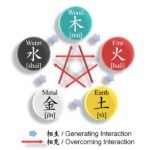
- Unveiling the Past and Present of Saju: The Art of Korean Fortune TellingIntroduction to Saju Saju, a traditional Korean fortune-telling practice, is an intricate art that seeks to interpret an individual’s fate based on their birth date and time. The term “Saju” translates to “four pillars” in English, referring to the four critical components derived from these time markers: year, month, day, and hour. This method holds significant cultural value within South… Read more: Unveiling the Past and Present of Saju: The Art of Korean Fortune Telling