
COVER STORY
The room goes quiet before the flash even fires. That’s the first thing you notice on set with AHOF — not the styling, not the choreography of hands and hips finding their marks, but the silence they carry into a frame. It’s the silence of people who have stopped performing certainty and started performing presence.
Cosmopolitan Korea’s August issue catches them mid-transformation, and the timing isn’t accidental. AHOF, managed by F&F Entertainment, has spent the last cycle shedding the vocabulary other groups still lean on — the over-explained concept, the tidy origin story, the algorithm-friendly hook. What’s left is sharper. Colder in the right places, warmer in others. A group that has stopped asking to be understood and started insisting on being felt.
This is what cultural temperature looks like when it’s rising: not noise, but gravity.
The Shift You Can See From Space
Every group has a before-and-after. For AHOF, it wasn’t a single comeback — it was a refusal. Somewhere between their earlier era and now, they stopped optimizing for virality and started optimizing for texture.
Tracklists got stranger. Visuals got quieter, then suddenly loud in unexpected places. The choreography stopped chasing symmetry and started chasing tension.

That line, dropped almost offhand during the shoot, is the whole thesis. AHOF’s turning point wasn’t a bigger stage. It was the decision to make smaller, stranger choices and trust the audience to follow. The audience followed.

Fashion as the First Language, Not the Translation
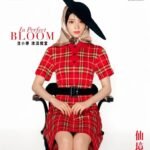
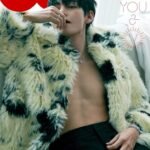
Most idol pictorials style the artist. Cosmopolitan Korea’s August spread does something rarer — it lets AHOF style the narrative. Structured outerwear cut like architecture. Fabrics that catch light like they’re arguing with it. Nothing here reads as costume; it reads as position-taking.
There’s a deliberate friction running through the editorial: hard tailoring against soft, unfinished hems; monochrome discipline broken by one impossible color per frame.
It’s not a “concept.” It’s closer to a mood board that refused to compromise, then got worn into the world. That friction is the point. AHOF’s fashion identity doesn’t decorate their music — it argues with it, the same way a good remix argues with the original. You leave the pages not thinking “great outfit,” but “great decision.”
Sound, Vision, Synchronized Rebellion
What makes AHOF’s current era feel inevitable rather than trendy is how tightly the disciplines are locked together. The production choices — low-end that sits under the skin, vocal runs left slightly unpolished — mirror the visual language exactly: nothing over-smoothed, nothing apologizing for its edges.
Watch the choreography against the instrumentation and you’ll notice the group isn’t dancing to the beat so much as negotiating with it — pulling against the rhythm in the verses, snapping into total unity for the drop. It’s a performance philosophy as much as a routine: control as a form of release.
This is creative direction functioning the way it’s supposed to — not four departments working in parallel, but one instinct expressed four ways.


The Fandom Isn’t Watching. It’s Building.
Scroll the tags and you’ll see it immediately: AHOF’s fandom doesn’t just consume content, it annotates it. Frame-by-frame breakdowns of a two-second visual cue.
Threads dissecting a single wardrobe callback from three eras ago. Edits that treat the discography less like a playlist and more like a shared language being actively expanded.
That’s the real marker of cultural weight in 2026 — not stream counts alone, but the density of interpretation an artist generates.
AHOF’s audience behaves like archivists of something still being written, which is precisely why the group’s influence keeps outrunning any single comeback cycle.
In a landscape where K-pop’s global aesthetic export has become almost infrastructural — shaping runway silhouettes, beauty standards, even the pacing of Western pop releases — AHOF represents something more specific than “the next big group.” They represent a refusal to flatten that export into a template. Where the genre’s global expansion has sometimes meant smoothing idols into universally palatable shapes, AHOF is doing the opposite: getting more particular, more regionally and personally textured, and finding that specificity travels further, not less.
Where They Stand, Where They’re Headed
Right now, AHOF occupies a rare position: established enough to be trusted with ambiguity, new enough that every move still feels like a discovery. That’s a narrow window most groups either arrive at too late or abandon too early for safer ground.
The Cosmopolitan Korea pictorial doesn’t try to resolve that tension — it photographs it. Every frame holds the same quiet confidence: not performing for the camera, but letting the camera catch up to something already in motion.
If K-pop’s next chapter is about artists who treat fashion, sound, and identity as a single continuous statement rather than three separate departments, AHOF isn’t following that chapter. They’re drafting it.


こちらからフィードバックがありますか?こちらからお知らせください。日本語でも大丈夫です。
피드백이 있으신가요? 여기에서 알려주세요. 한국어도 가능합니다
Credits & Rights
Editorial produced by Kpoppie Magazine, published by Velocity Entertainment Inc. Limited (Japan / New Zealand).
Cover feature: Cosmopolitan Korea, August 2026 Issue. Artist management: F&F Entertainment.
All original photography © Cosmopolitan Korea / F&F Entertainment. Editorial commentary and social adaptation © Kpoppie Magazine / Velocity Entertainment Inc. Limited.
Hero image AI-adjusted for aspect ratio and web formatting only. All original photography © Cosmopolitan Korea / F&F Entertainment.
The Latest Posts
- AHOF Redraws the Grid: Inside Cosmopolitan Korea’s August Vision
- Martin and James Turn Paris Into a K-pop Fashion Signal
- AEN: A New Era of Now — Seven Voices, One Eternal Beginning
- Alice Syndrome: The Deep End of Debut
- BILLLIE — Rolling Stone Korea Issue No. 18: The Sound of Seven Souls Waking Up
The post AHOF Redraws the Grid: Inside Cosmopolitan Korea’s August Vision appeared first on Kpoppie – Breaking Kpop News and Fashion.