South Korea’s finance minister will discuss tariff issues with his US counterpart in Washington this week, marking the first trade talks under Korea’s Lee Jae-myung government, as the two countries race to finalize a deal before steep tariffs take effect on Aug.1.
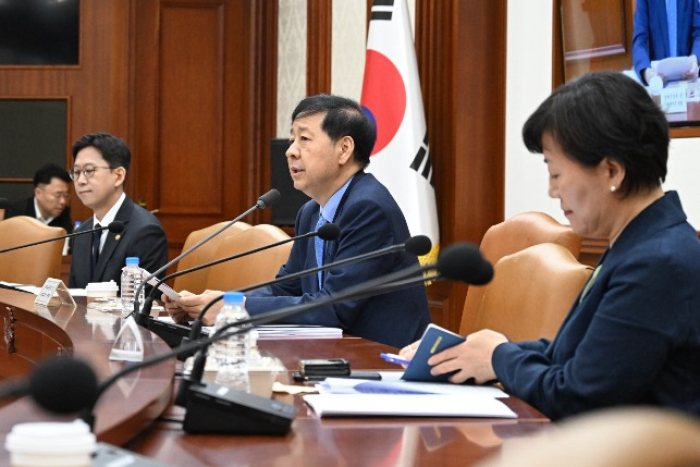
“We have confirmed the date for a ‘2+2’ meeting with the US on July 25,” Korea’s Deputy Prime Minister and Minister of Economy and Finance Koo Yoon-cheol told reporters following a meeting on key economic affairs on Tuesday.
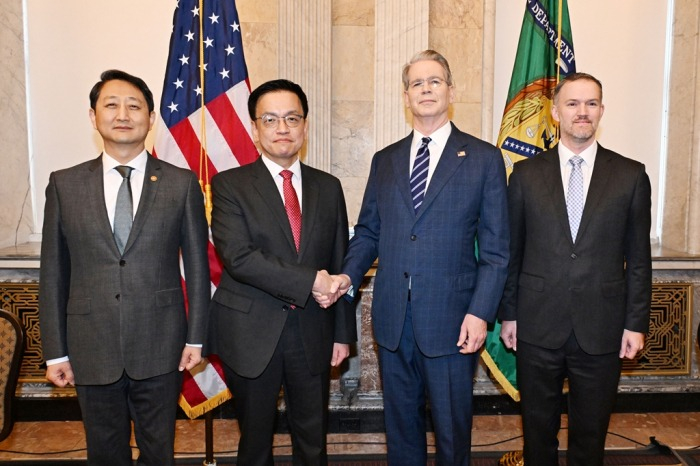
Joining Koo in the meeting will be Trade Minister Yeo Han-koo, while the US side will be led by Treasury Secretary Scott Bessent and US Trade Representative (USTR) Jamieson Greer.
This will be the second round of bilateral trade talks between the two countries, but the first led by the finance chief of President Lee’s administration, which took office in early June following the ouster of former President Yoon Suk Yeol for an ill-fated martial law declaration.
The meeting falls just a week ahead of the Aug. 1 deadline set by the US to strike tariff deals with countries identified by Washington as having current account and trading surpluses.
Korea will also send Minister of Trade, Industry and Energy Kim Jung-kwan and Foreign Minister Cho Hyun to Washington this week for separate bilateral meetings with their US counterparts, said Koo.
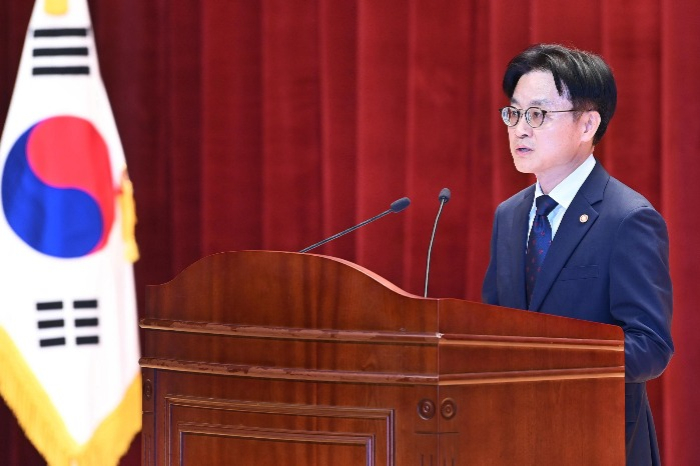
“With the Aug. 1 deadline fast approaching, all relevant departments are working together as one team to go all-out with a practical, unified strategy for the national interest,” the finance minister added, declining to provide further details.
TARIFF CLOCK IS TICKING
Earlier this month, US President Donald Trump warned in a letter addressed to South Korean President Lee of plans to impose 25% on nearly all South Korean imports, effective Aug. 1, unless the two countries reach a trade agreement before the deadline.
The move follows a 90-day pause in tariff implementation.
The 25% sweeping duties are separate from a 25% tariff on imported vehicles and automotive parts, along with 50% duties on steel and aluminum, rolled out in April.
The so-called 25% reciprocal tariffs, if implemented, will likely take a heavy toll on Korean carmakers and other manufacturing companies.
South Korean officials are expected to focus on reductions in both the reciprocal tariffs and product-specific duties.
A COMPREHENSIVE DEAL
As part of a comprehensive trade agreement, Seoul may also consider concessions in its agro-livestock sector, a hot-button issue in Korea, which will face a backlash from the country’s farmers’ groups.
Washington has long pressured Seoul to ease non-tariff barriers, including its import ban on American beef from cattle aged 30 months or older due to concerns over mad cow disease.
Broader geopolitical topics – such as the role of US military forces stationed in South Korea and cost-sharing arrangements – could also surface during the talks.
The two countries’ first formal bilateral trade negotiations under the new Trump administration were held in April.
At that time, then-Finance Minister Choi Sang-mok and former Trade and Industry Minister Ahn Duk-geun met with Secretary Bessent and USTR Greer in Washington, where they agreed to work toward a comprehensive tariff-liberalization package by July 8.
Both Korean officials have since stepped down, following the formation of Korea’s new government under President Lee last month.
By Jeong Min Nam
peux@hankyung.com
Sookyung Seo edited this article.