
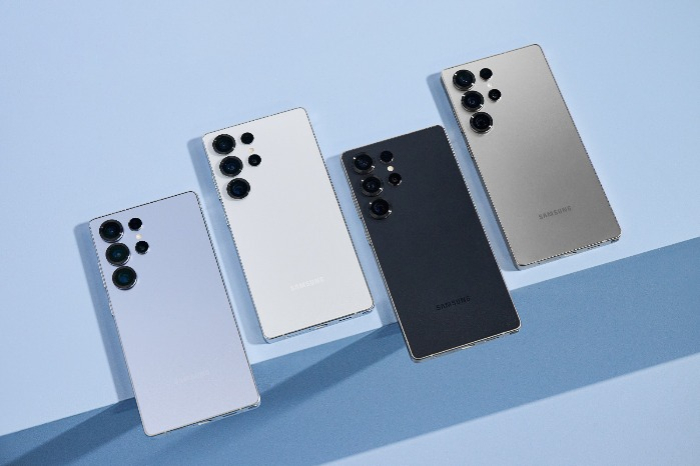
Samsung Electronics Co. will equip about half of its upcoming Galaxy S26 flagship smartphones with its latest Exynos 2600 application processor (AP) next year, making its boldest bid in years to revive its in-house chip ambitions spanning chip design and manufacturing.
Samsung’s homegrown processor will return to its top-tier Galaxy smartphone range, including the Ultra model, for the first time in four years, according to people familiar with the matter on Monday.
Devices sold in Korea and Europe will feature the newest Exynos 2600, while models bound for the US, Japan and China will continue to use Qualcomm Inc.’s Snapdragon chips.
The roughly 50-50 split is expected to mark a turning point for Samsung’s non-memory business, which has struggled with performance and production issues in recent years.
The processor, designed by Samsung’s System LSI unit and manufactured by its foundry business, Samsung Foundry, using a 2-nanometer process, has cleared internal testing and entered mass production, according to people familiar with the matter.
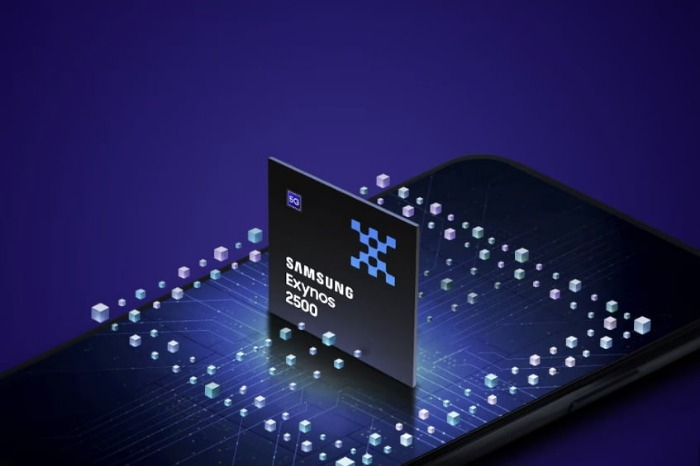
IMPROVED PERFORMANCE WITH AI AT THE CORE OF THE COMEBACK
A mobile AP, often referred to as the brain of a mobile device, is a system-on-a-chip (SoC) designed to support applications running in a mobile operating system environment.
Responsible for data processing in smartphones, the AP incorporates the central processing unit (CPU), graphics processing unit (GPU) and neural processing unit (NPU), making it a critical component in smartphone performance.
Samsung’s latest internal testing shows that the Exynos 2600’s NPU, which handles AI and machine learning tasks, delivers more than six times the performance of Apple Inc.’s A19 Pro chip.
Its multi-core CPU performs 14% faster, and its GPU offers up to 75% stronger performance than Apple’s, Samsung found.
When compared with Qualcomm’s Snapdragon 8 Elite Gen 5, the Exynos 2600’s NPU and GPU are 30% and 29% more powerful, respectively.
The results suggest Samsung’s long-troubled chip is finally competitive at the top end of the market, both in raw power and energy efficiency, sources said.

Samsung is said to have completely redesigned the chip’s architecture to boost performance, especially AI inference performance, what the company views as the key battleground in next-generation smartphones.
FROM SETBACKS TO A 4-YEAR RETURN
Samsung powered all Galaxy flagship models with its Exynos chips until 2015.
From 2016, it increasingly turned to Qualcomm processors for high-end models, relying almost entirely on the US supplier after thermal issues in the Galaxy S22 and low production yields damaged the Exynos brand.
The company reintroduced its in-house Exynos 2400 in the Galaxy S24 base and Plus models last year and expanded its use with the Galaxy Z Flip7 foldable, powered by the new Exynos 2500 and sold exclusively in Korea.
The comeback comes as Vice Chairman Jun Young Hyun Jun, who took over Samsung’s Device Solutions (DS) division, which oversees the company’s semiconductor business, last year, has driven an aggressive turnaround in the company’s System LSI and foundry businesses, both of which suffered losses of about 2 trillion won ($1.4 billion) each in the first half of this year.
The deficit is reportedly narrowed in the third quarter to the 1 trillion won range, and is expected to shrink further in the fourth as Exynos 2600 shipments ramp up.

FINANCIAL AND STRATEGIC PAYOFF
The Exynos revival is forecast to ease Samsung’s mounting AP purchasing costs.
The company spent 10.93 trillion won on mobile AP for its smartphones in 2024 and 7.79 trillion won in the first half of this year.
By equipping half of its Galaxy S26 lineup with Exynos, Samsung is projected to halve its annual payments to Qualcomm while lifting profitability across its chip and smartphone units.
The move also comes as Samsung steps up its investment in manufacturing capacity.
The company plans to deploy two next-generation extreme ultraviolet (EUV) lithography machines from ASML Holding N.V. next year at its 2-nanometer lines, where the Exynos 2600 will be produced.
POSITIONING IN A SHIFTING GLOBAL MARKET
With its new AI-enhanced processor, Samsung is seeking to leap ahead of Apple and Qualcomm in the race to define the emerging AI smartphone market.
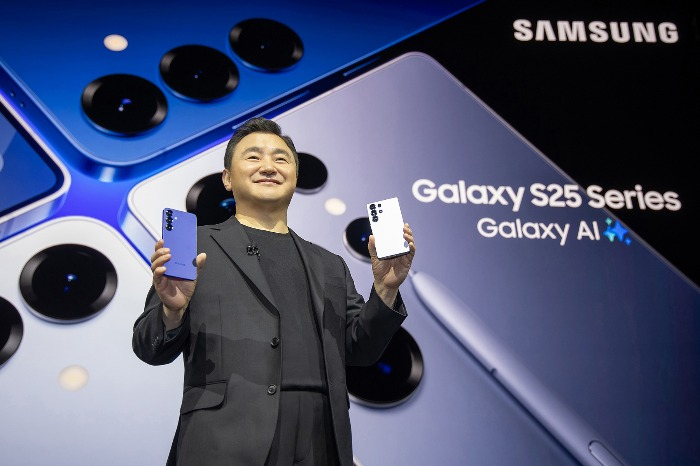
Apple has yet to roll out fully integrated on-device AI functions in its iPhones, while Samsung launched its first AI-powered phone, the Galaxy S24, in early 2024.
Industry observers say the Galaxy S26 series will serve as Samsung’s showcase for how hardware-level AI processing can enhance user experience.
Samsung’s turnaround efforts are expected to extend beyond even next year, analysts said.
The company recently secured a $16.5 billion chip supply deal with Tesla Inc. for its AI6 autonomous driving processors, and it will begin supplying image sensors for Apple’s iPhones as early as next year.
Analysts say those deals, combined with the Exynos 2600 rollout, will accelerate recovery in Samsung’s non-memory chip operations, long considered its Achilles’ heel compared with its world-leading memory business.
The global mobile AP market, worth about $35 billion annually, remains dominated by MediaTek Inc. with 36%, followed by Qualcomm at 28%, Apple at 17%, UNISOC of China at 10% and Samsung at 5%, according to Counterpoint Research.
By Eui-Myung Park, Jeong-Soo Hwang and Chae-Yeon Kim
uimyung@hankyung.com
Sookyung Seo edited this article.