
In Seoul, even a hotel room costing 1 million won ($705) a night is hard to come by.
From five-star towers in the affluent Gangnam district to budget hotels in Myeongdong’s bustling shopping lanes, rooms across the South Korean capital are selling out as record numbers of foreign tourists and Korean pop culture fans drive hotel prices to all-time highs.
Average daily room rates (ADRs) in the Seoul-Incheon area surged to nearly 296,000 won in September, up 14.6% from a year earlier, according to global hotel data provider STR, owned by CoStar Group Inc., on Thursday.
This marks the first time the region’s hotel ADR has approached the 300,000-won threshold.
Occupancy also reached 80.8% in August and 81.6% in September, effectively full if suites and reserve rooms are excluded.
“The pace of Seoul’s hotel rate growth over the past few years has been remarkable,” said a representative at STR. “Luxury openings have lifted the averages, while new supply has increased by only about 2% annually over the past two to three years.”

A MARKET ON FIRE
Mid-range hotels are leading the rally, with room rates jumping 13.9% through August, nearly double the pace of luxury properties.
Weekend stays have become especially costly, with Friday and Saturday rates rising nearly 5% each, compared with just 1-2% growth midweek.
At the top end, prices are setting new records.
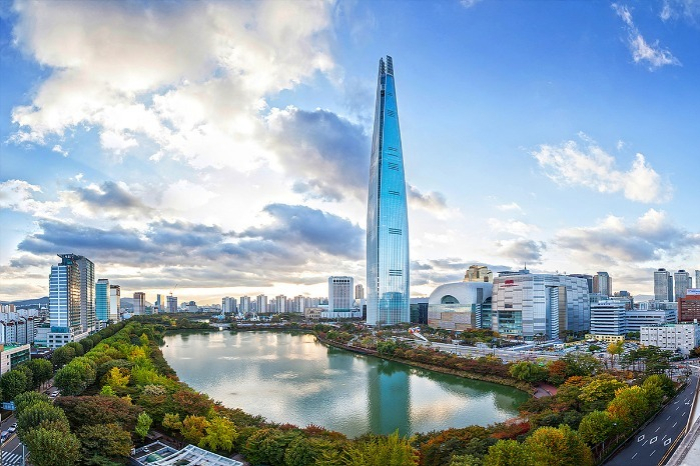
Lotte Hotel’s Signiel Seoul, perched atop the 123-story Lotte World Tower, saw sales rise 5-6% in the first nine months of this year.
Despite repeated price hikes, occupancy has held firm, with weekend rooms now starting at 1 million won on global booking sites and weekday stays in the 800,000-won range.
At Four Seasons Hotel Seoul, average room rates recently topped 900,000 won, more than double the city’s five-star average.
GS P&L, which operates the Grand InterContinental Seoul Parnas and Westin Seoul Parnas, said its ADR jumped 16.3% in September from a year ago.
TOURISM SURGE MEETS TIGHT SUPPLY
The rate surge has been fueled largely by an influx of foreign visitors as Seoul solidifies its reputation as a global cultural capital.
South Korea welcomed about 12.4 million foreign travelers from January through August, up 16% from a year earlier and on pace to surpass its pre-pandemic record of 17.5 million in 2019.
The Korean government expects 18.5 million arrivals this year, while some in the industry project as many as 20 million, aided by the late-August reinstatement of visa-free entry for Chinese tour groups.
The shift from group tours to independent travelers has also contributed to higher room rates.
Group tourists often receive discounted rates through bulk tour bookings, while individual travelers typically pay more through online travel agencies and hotel membership programs.
“Hotel bookings through online platforms have surged since last year,” said another hotel executive. “With growing demand from both foreign and domestic guests, prices are likely to stay elevated well into next year.”

Officials credit the broader boom to K-content tourism, festivals and viral cultural exports such as KPop Demon Hunters, a hit Netflix animation that has inspired a wave of fan pilgrimages to Seoul’s landmarks and filming sites.
Strong weekend demand from domestic travelers is also helping sustain high occupancy, with many willing to pay premium rates across all segments.
RATES MAY PEAK
Analysts say limited new hotel supply has amplified the price pressure.
Land shortages in central Seoul, rising construction costs and tighter financing have slowed hotel projects to a crawl, leaving the city’s room inventory virtually frozen despite growing demand.
Still, some analysts caution that Seoul’s hotel market may be nearing its peak.
In Tokyo, where room rates hit record highs last summer, prices have since eased after nearly three years of uninterrupted gains.
Seoul could see a similar correction if global demand softens due to the economic slowdown, an industry official said.
By Jae-Kwang Ahn
ahnjk@hankyung.com
Sookyung Seo edited this article.