

Growth equity investments have remained largely stable in the face of recent policy shifts, with key sectors like technology and healthcare avoiding major disruptions from US tariff changes, the chief of Summit Partners LP said at the ASK 2025 investment conference in Seoul last month.
Peter Chung, managing director and chief executive officer of Summit Partners, also said the current rate environment is “quite constructive,” providing investors “a very good backdrop in which to generate very attractive returns.”
As an active investor, Summit Partners is now evaluating whether its portfolio companies and potential investments are AI disruptors or disruptees, recognizing this distinction could reshape the industry landscape as profoundly as the Internet did in the late 90s and early 2000s, he added.
Headquartered in Boston, Massachusetts, the US alternative investment firm is a pioneer in growth equity investing. Since its founding in 1984, the firm has remained committed to a core principle – backing profitably growing companies resilient to macroeconomic headwinds.
With over $46 billion in assets under management, Summit Partners has invested in more than 550 companies in technology, healthcare and other growth industries. And these companies have completed over 175 public equity offerings, while more than 250 have been acquired through strategic mergers and sales.
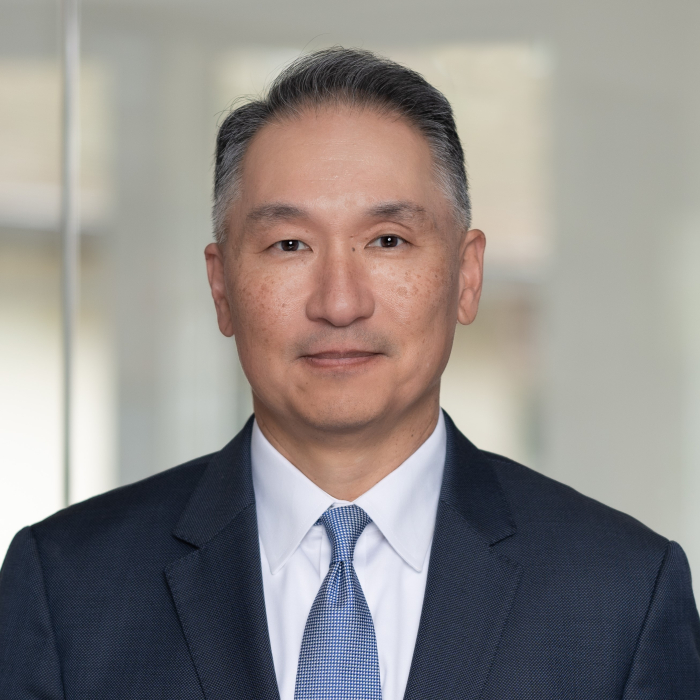
At the ASK 2025 event, Chung offered deeper insights into Summit Partners’ investment philosophy, emphasizing disciplined portfolio construction and active management to navigate today’s volatile policy landscape, especially in the US.
The following is an edited transcript of a panel session with CEO Peter Chung at ASK 2025 in Seoul on May 21, 2025.
▶ “Growth equity” can mean different things to different GPs/LPs. How does Summit Partners define growth equity?
“When our firm was founded in 1984, the category of growth equity did not exist. So really, our strategy has not changed much since our founding 41 years ago, and that is that profitable growth is the most reliable source of superior risk-adjusted returns through market and macro cycles.
Now, more recently, this has become quite a large category, and it encompasses a wide variety of styles, everything from late-stage venture or growth-stage venture, all the way through crossover, including our strategy as well. But I think the common denominator is that growth in revenue and/or in profits is the driver of the returns, as opposed to leverage or multiple.”
▶ How has the definition or perception of growth equity evolved in the last decade in the industry and where do you see it heading?
“Now, where I see it heading, I think, is that it will become increasingly more segmented and defined, very much like buyout today. Buyout has sub-sectors, like mid-market and large-cap. There are geographic-specific funds. There are sector-specific funds and so forth. And I think growth equity will evolve similarly, where it becomes more segmented. Each of sub sectors will become more defined, and the LPs understanding of the overall asset class will continue to increase.”

▶ How do external policy factors – tariffs, interest rates, regulatory shifts – impact growth equity portfolios and investment strategy?
“The two largest industry sectors, in which growth equity capital is invested, are technology and healthcare, and those are industries that are largely not directly affected by tariff policies. Of course, tariff policy is a moving target, so we won’t know what tariff policy is for some period of time, but at this moment, we don’t see much direct impact on either technology or on health care due to tariffs.
Healthcare is a highly regulated industry, and there is currently an ongoing reimbursement review, as well as a rising level of regulation, particularly at the state level, in the healthcare of the United States. So that creates a bit of a more challenging macro landscape for health care services investing, but also opportunities as well….
We think that, actually, the rate environment today is quite constructive. It adequately reflects the cost of capital and the cost of time, and it provides investors a very good backdrop in which to generate very attractive returns.”
▶ With increasing market competition, how has Summit Partners continued to improve?
“For many years, we’ve been an innovator in value enhancement and growth equity, but that growth equity and that value enhancement capability need to continuously evolve to meet the needs of our portfolio and our and the market dynamics. And so we’re evolving that function at our firm at a very rapid rate.
We have built our own business intelligence and workflow platform … and then more recently, I would say that we’re beginning to embrace AI in its very early stages.
But overall, concepts like innovation and continuous improvement are deeply embedded in our culture. They’re one of our standing goals as a firm every year.”

▶ What internal processes or technologies (e.g., AI) are leading firms adopting to stay ahead in sourcing, diligence, and execution?
“AI makes doing things like company research or market research very, very efficient. Of course, this also contributes to a deeper foundation of sector expertise, on which to make company selection or to select assets. But we’re starting to see some of this in its early stages, and then we’re also investing a lot, not necessarily in AI, but a lot of time, effort, energy and data in talent assessment, leadership teams and management.
And management is becoming an increasingly differentiating factor in a company and investment performance, particularly now that the macro and monetary policy tailwind of the pre-COVID eras is in the rearview mirror. So I’d say, as a firm, one of our more important emphases is really developing as much rigor as possible to make very good assessments of management talent that we back or hire into our portfolio companies, and then to provide a framework, with which to assess the performance of leadership teams objective data-driven way as possible.”

▶ How are firms like Summit helping portfolio companies navigate not just growth, but scale, operational complexity, and macro headwinds?
“The most important thing for active portfolio management, we believe, is having very close strategic alignment with those management teams. Of course, we exercise influence, if not control, through our role on the board and through our contractual protections as minority investors.
At the fund level, we think that a very important part of active portfolio management is exit discipline, and here we reflected on some of the lessons we’ve learned in past cycles – the bursting of the tech bubble, or during the GFC. …. So since then, we have embedded exit discipline into our processes, and of course, this allows us to manage market risk.
More recently, I think we’ve really engaged in conversations with our portfolio companies about AI strategy. Again, recognizing that it’s still quite early days, we’re asking the question of every one of our existing portfolio companies, as well as new deals, whether they are an AI disruptor or an AI disruptee because I think there will be that distinction, like we saw with the internet in late 90s and early 2000s. That will take place over the next several years.”
By Sookyung Seo
skseo@hankyung.com
Jennifer Nicholson-Breen edited this article.