 |
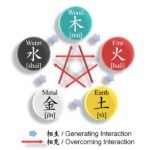
Hello from Seoul. Looking at this table, I realized it explains something important about why Korean food developed so differently from its neighbors. People often describe Chinese cuisine as incredibly diverse—and it is. A vast continent allows for regional abundance, oil-heavy cooking, and rich meat stocks. At first glance, Korean food might seem like just a subset of that larger spectrum. But there is one key difference: Korean food historically uses very little oil. 1. Cooking without oil (Look at the pork)Unlike many Chinese dishes that rely on frying and lard, the pork in my photo is boiled, not fried. Historically, raising pigs for fat was difficult in Korea. Pigs compete with humans for grain, and grain was scarce. Cattle, on the other hand, were preserved for farming. As a result, Korean cooking evolved around boiling, steaming, and blanching, with only small amounts of plant-based oils like sesame oil. This is why Korean food often tastes clean and light rather than rich or greasy. Interestingly, meals can feel filling while remaining relatively low in calories—a weakness in premodern times, but a strength in today’s health-conscious world. 2. Fermentation as a substitute for abundance (Look at the side dishes)Scarcity also explains why fermentation became central, not optional.
Fermentation allowed Korean food to generate deep umami without relying on meat fat or large quantities of protein. 3. Using everything: food without hierarchy (Look at the Sundae)The sausage-looking dish is Sundae, made from pig intestines filled with noodles, vegetables, and blood. When resources are scarce, nothing is wasted. “Inedible” parts become delicacies. This is why, historically, the gap between what a “king” ate and what a peasant ate in Korea was much smaller than in many other societies. SummaryThis meal isn’t just dinner. It’s a portable history lesson. Korean food is a high-efficiency survival system shaped by scarcity: Ironically, these survival traits—low oil, fermentation, minimal waste—are exactly what modern people now consider healthy, sustainable, and low-carbon. P.S. submitted by /u/Andrew_YH_Han |
Why Korean food is so different from Chinese or Japanese food: a cuisine shaped by scarcity, not abundance (feat. my dinner)
Related Posts
Latest News from Korea
- OpenAI says Canada mass shooter evaded ban with second ChatGPT account
 OTTAWA, Ontario — ChatGPT-maker OpenAI said Thursday the shooter in one of the worst school shootings in Canada’s history got around a ban on her problematic use of the service by having a second account. The revelation came as the San Francisco tech company outlined in a letter to Canada’s government some “immediate steps” it was taking in response to… Read more: OpenAI says Canada mass shooter evaded ban with second ChatGPT account
 - Seoul shares sharply down late Friday morning on profit-takingSeoul shares extended losses late Friday morning as investors offloaded technology and other large-cap stocks to lock in profits. The benchmark Korea Composite Stock Price Index (KOSPI) fell 107.49 points, or 1.7 percent, to 6,199.78 as of 11:20 a.m. On Thursday, the index jumped 3.67 percent to finish at a record high of 6,307.27, marking a winning streak of six… Read more: Seoul shares sharply down late Friday morning on profit-taking
- Anthropic CEO says it ‘cannot in good conscience accede’ to Pentagon’s demands for AI useWASHINGTON — Anthropic CEO Dario Amodei said Thursday that the artificial intelligence company “cannot in good conscience accede” to the Pentagon’s demands to allow unrestricted use of its technology, deepening a public clash with the Trump administration that is threatening to pull its contract and take other drastic steps by Friday. The maker of the AI chatbot Claude said in… Read more: Anthropic CEO says it ‘cannot in good conscience accede’ to Pentagon’s demands for AI use
- Samsung family celebrates son’s admission to Korea’s top universityHotel Shilla CEO Lee Boo-jin attended the Seoul National University (SNU) entrance ceremony on Feb. 26 to celebrate the admission of her son, Im Dong-hyun. The 19-year-old Im entered the university’s Department of Economics through early admission for the 2026 academic year. His enrollment continues the Samsung family’s legacy at the country’s most prestigious university, following his maternal uncle, Samsung… Read more: Samsung family celebrates son’s admission to Korea’s top university
- Tax revenue rises $4.3 bil. in January on increased value-added taxKorea’s tax revenue increased by 6.2 trillion won ($4.3 billion) from a year earlier in January, driven by increases in value-added tax and income tax collections, government data showed Friday. The government collected 52.9 trillion won in taxes last month, up 13.4 percent from the same period last year, according to the data from the Ministry of Economy and Finance.… Read more: Tax revenue rises $4.3 bil. in January on increased value-added tax




Latest Entertainment from Korea
- LE’V Steps Into the Light: “Spotlight Soul” Captures the Artistry, Growth, and Glow of a New Era in the 2026 Season’s Greetings CollectionPhoto Credits: CHROMOSOME LE’V Illuminates 2026 with “Spotlight Soul” LE’V enters 2026 with a statement that feels both cinematic and deeply personal. His Season’s Greetings “Spotlight Soul” concept photos reveal a striking evolution — one that merges emotional depth with artistic clarity. The project, released as a collector’s visual experience, celebrates not just another year but LE’V’s firm grasp on identity, craft,… Read more: LE’V Steps Into the Light: “Spotlight Soul” Captures the Artistry, Growth, and Glow of a New Era in the 2026 Season’s Greetings Collection
- KiiiKiii Leesol & Haum Illuminate SPUR x Dior Addict’s January 2026 Issue with Daring Light, Sensual Motion, and New Beauty CodesPhoto Credits: SPUR Dior Starship Entertainment A New Year, A New Iconic Pairing SPUR Magazine opens 2026 with a collaboration that feels both intimate and electric. The January 2026 Issue Pictorial Preview showcases KiiiKiii Leesol and Haum in a visual dialogue infused with Dior Addict’s luminous rebellion. Titled “Light Moves: The Addict State of Mind”, the spread captures the interplay of motion, reflection, and self-definition—a signal… Read more: KiiiKiii Leesol & Haum Illuminate SPUR x Dior Addict’s January 2026 Issue with Daring Light, Sensual Motion, and New Beauty Codes
- Breaking Boundaries: ifeye × KITTO Taiwan Redefine Visual Storytelling in the January 2026 Pictorial — A Fusion of Innovation & IdentityPhoto Credits: Hi-Hat Entertainment The Convergence of Vision and Identity The January 2026 Pictorial from ifeye × KITTO Taiwan marks a defining moment in East Asian creative media. Framed as both a celebration and an evolution, the collaboration bridges art direction, fashion narrative, and technological fluidity to capture a new generation’s pulse. More than a photoshoot, this issue acts as a visual manifesto—an exploration of… Read more: Breaking Boundaries: ifeye × KITTO Taiwan Redefine Visual Storytelling in the January 2026 Pictorial — A Fusion of Innovation & Identity
- Xiaoting in Full Bloom: Kep1er’s Shining Star Redefines Power, Grace, and Global Glamour in Wonderland China’s January 2026 Cover StoryPhoto Credits: KLAP ENTERTAINMENT Kep1er’s Xiaoting Captures the Moment Kep1er’s Shen Xiaoting steps into 2026 as a muse of modern elegance, fronting the January 2026 Wonderland China cover with an aura that’s both futuristic and fiercely grounded. As one of the brightest stars of her generation, Xiaoting embodies the balance between aspiration and artistry that defines global pop’s next chapter. “Confidence is not just… Read more: Xiaoting in Full Bloom: Kep1er’s Shining Star Redefines Power, Grace, and Global Glamour in Wonderland China’s January 2026 Cover Story
- BTS’s V Radiates Timeless Charisma in GQ Korea x Cartier’s February 2026 Cover: A Monument to Modern Elegance and Emotional PrecisionPhoto Credits: GQ Korea – Cartier – BigHit Music. – BTS V x Cartier: The Sound of Stillness and Strength For GQ Korea’s February 2026 issue, the cover unfolds like a cinematic confession. BTS’s V (Kim Taehyung)—known for his magnetic duality of mystery and warmth—joins forces with Cartier, the house synonymous with precision, artistry, and legacy. Together, they create a visual symphony that celebrates… Read more: BTS’s V Radiates Timeless Charisma in GQ Korea x Cartier’s February 2026 Cover: A Monument to Modern Elegance and Emotional Precision




Learn People & History of Korea
- The Evolution of Busan: A Historical Journey Through South Korea’s Second Largest Metropolitan CityAncient Beginnings: The Founding of Busan Busan, known as the second largest metropolitan city in South Korea, has a rich history that dates back to ancient times. The earliest recorded existence of Busan can be traced to the Goryeo Dynasty, where it was referenced as a vital coastal settlement. Its strategic location along the southeastern coast of the Korean Peninsula… Read more: The Evolution of Busan: A Historical Journey Through South Korea’s Second Largest Metropolitan City
- The Evolution of Pyongyang: A Journey Through History, Economy, and Political DynamicsIntroduction to Pyongyang Pyongyang, the capital city of North Korea, serves as a prominent symbol of the nation’s history and culture. Geographically located on the banks of the Taedong River, in the southwest part of the country, Pyongyang is situated within a strategic area that has historically facilitated trade and cultural exchange. The city’s origins can be traced back to… Read more: The Evolution of Pyongyang: A Journey Through History, Economy, and Political Dynamics
- The Evolution of Seoul: From Ancient Korea to Modern Metropolis and BeyondAncient Beginnings: The Founding of Seoul The city of Seoul, known today as the vibrant capital of South Korea, has ancient roots that trace back to the Three Kingdoms period of Korea, specifically the kingdoms of Baekje and Silla. Evidence suggests that Seoul was originally established as a settlement given its strategic geographical advantages. Nestled within the Han River basin,… Read more: The Evolution of Seoul: From Ancient Korea to Modern Metropolis and Beyond
- Exploring Korean Traditional Games in Squid Game: From Season 2 to Upcoming Season 3Introduction to Korean Traditional Games Korean traditional games have long been an integral part of the country’s cultural landscape, offering more than mere entertainment. These games, which range from simple children’s pastimes to complex community activities, hold significant cultural significance and often serve as a means of preserving history and promoting social interaction. Rooted in centuries of tradition, these games… Read more: Exploring Korean Traditional Games in Squid Game: From Season 2 to Upcoming Season 3
- Unveiling the Past and Present of Saju: The Art of Korean Fortune TellingIntroduction to Saju Saju, a traditional Korean fortune-telling practice, is an intricate art that seeks to interpret an individual’s fate based on their birth date and time. The term “Saju” translates to “four pillars” in English, referring to the four critical components derived from these time markers: year, month, day, and hour. This method holds significant cultural value within South… Read more: Unveiling the Past and Present of Saju: The Art of Korean Fortune Telling