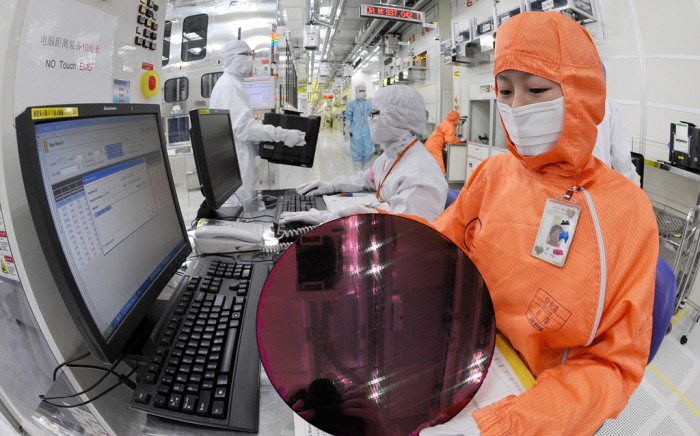
The US government is considering allowing Samsung Electronics Co. and SK Hynix Inc. to bring US-made chipmaking equipment to their plants in China under a limited approval scheme.
The US Department of Commerce has proposed granting Samsung and SK Hynix, South Korea’s two largest chipmakers and the world’s two largest memory chipmakers, annual permits to ship certain tools to their Chinese facilities, according to a Bloomberg News report on Monday.
US officials last week presented to Korean counterparts a “site license” idea to supplant indefinite authorizations the chipmakers secured under the previous Biden administration, the media outlet reported, citing people familiar with the matter.
REMOVED FROM VEU LIST
Samsung and SK Hynix previously enjoyed privileged status under Washington’s validated end user, or VEU, program, which allowed designated factories to receive US-made equipment without additional license requirements.
But the Trump administration recently removed the Korean chipmakers’ Chinese operations from the list, stoking fears that their plants could face operational disruptions or difficulty upgrading devices
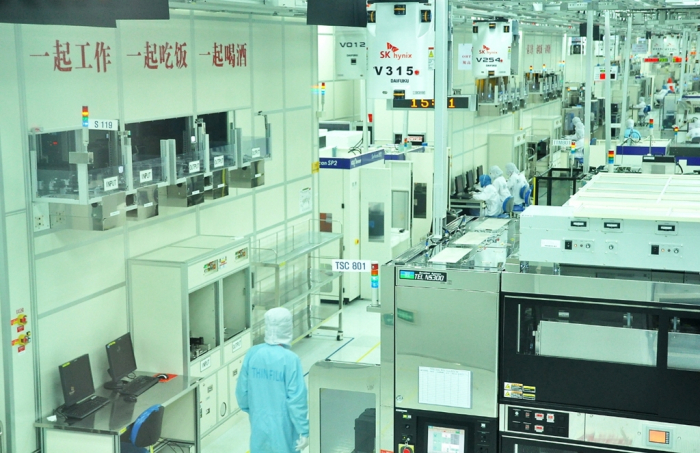
Samsung and SK’s Chinese facilities are production bases of general-purpose semiconductors rather than advanced products such as high-bandwidth memory (HBM) chips, which are essential for artificial intelligence.
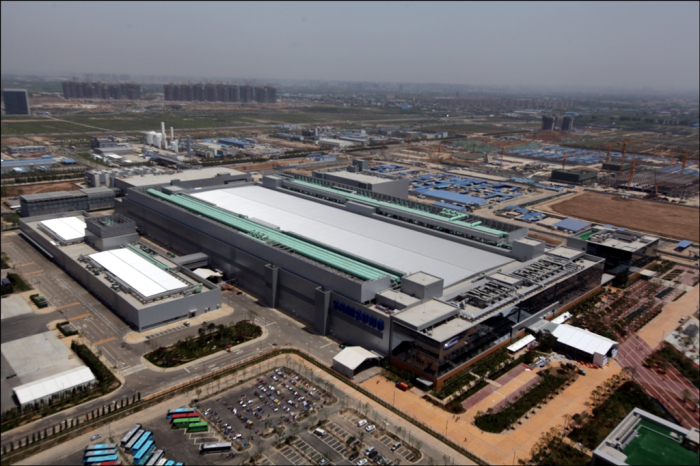
Samsung produces about 35-40% of its total NAND flash memory chips at its facility in Xian, Shaanxi, while SK Hynix manufactures about 40% of its DRAM in Wuxi, Jiangsu, and 20% of NAND flash chips in Dalian, Liaoning.
The US revoked the VEU waivers days after Korean President Lee Jae Myung, who promised more balanced US-China relations, struck a defense and investment deal with President Donald Trump.
BUREAUCRATIC BURDEN
The new arrangement, if adopted, would provide the Korean chipmakers with a measure of certainty to maintain existing production lines.
The proposal, however, requires the Korean chipmakers to seek US approval annually for exact quantities of restricted equipment, introducing more regulatory steps.
Critics are also questioning the new arrangement’s practical impact, noting that Washington still intends to bar any exports that could be used to expand or upgrade the plants’ technology.
Discussions between Washington and Seoul over the approval are ongoing and no final decision has been made, according to the media report.
By Jeong-Soo Hwang
hjs@hankyung.com
In-Soo Nam edited this article.