
 |
As someone deeply concerned about digital sexual crimes, dating violence, and structural discrimination against women in South Korea, I find this situation very unfortunate. These issues require the attention and cooperation of men to be solved. However, some extreme (so called) feminist groups have fueled a victim mentality and backlash among men, effectively burning bridges for cooperation. Anyone familiar with Korean language will definitely realize that the viral tweet in question was NOT written by a South Korean man and Nor was it even a serious attempt at impersonation. I am not an anti-feminist, nor am I here to defend South Korean men unconditionally. However, I believe the narrative that “South Korean men are angry because they are insecure about their size” is heavily distorted. I want to explain the factual context that many foreigners might miss. 1. The Meaning of the Symbol The 🤏 gesture is a symbol specifically associated with Megalia and Womad, which are extremist communities claiming to be feminist in South Korea. Members of these groups have infiltrated various institutions and corporations, using this gesture as a covert “dog whistle” to signal their presence and ideology. Consequently, South Korean society is highly sensitive to this imagery, and companies actively avoid employees associated with groups that cause such social controversy. This isn’t limited to feminist groups. Ilbe, a far-right community of young men, uses a specific hand sign (👌) which is also socially taboo. Celebrities or employees caught using the Ilbe sign have faced severe boycotts and disciplinary actions. Companies strive to prevent the use of the Ilbe symbol just as they do with the 🤏 symbol. It is about removing hate speech symbols from public/commercial spaces, not just about the shape itself.
Megalia and Womad are not just “radical feminists”. The feminism is just their mask and they’ve been involved in serious crimes and issues. • Child Abuse – The “Hoju Gukja” Case (2017): One of the most disturbing incidents involved a Womad member known as ‘Hoju Gukja’ (Areum Lee). Working as an Au Pair in Australia, she deliberately spiked a young Australian boy’s juice with sleeping drugs to sexually molest him while he was unconscious. She filmed the abuse and posted it to Womad, where, shockingly, members cheered her on and sexualized the child instead of reporting the crime. This act led to her immediate arrest by the Australian police and served as undeniable proof that the community acts more like a ring of sexual predators than a feminist rights group. Daily Mail • Transphobia (TERF): Womad and Megalia are extremely hostile toward the LGBTQ community, especially trans women. When a transgender woman tried to enter Sookmyung Women’s University, Megalia/Womad members cyberbullied her and organized a mass protest, forcing her to withdraw. They attacked her simply because they didn’t consider her a “biological female,” causing her severe mental distress. Korea Herald • Mockery of the Deceased: They have habitually mocked war veterans and deceased male workers, calling their corpses ‘meat.’ Many of these victims were not even the young men they claim to oppose, but who sacrificed themselves for their family and the country. This crossed a line that provoked anger across the entire nation, regardless of gender or politics. • Nude Photo Leak (Molka): In a notorious case, a Womad member secretly took a nude photo of a male nude model during an art class and leaked it online. Members mocked his body and sexually harassed him. The model was not even an anti-feminist, just a random ordinary man doing his job. The perpetrator was arrested and sent to prison. This was a clear act of the very digital sexual crime (Molka) they claim to fight against. BBC The atrocities mentioned above are just a fraction of the controversy. Are these crimes more serious than crimes committed by men against women? No. But is it reasonable for companies to prevent groups that engage in such behavior from representing their brand? Yes. 3. The “Insecurity” Narrative Megalia and Womad are quite strategic. They frame the backlash against the 🤏 symbol as proof of “incel insecurity about small penises.” This narrative works well on foreigners who lack context, but it doesn’t align with the reality in South Korea. It’s similar to the absurd internet myth where some Chinese netizens mock South Koreans by saying, “They are so poor they can’t even afford watermelon”, a rumor that sounds plausible only to those who know absolutely nothing about the reality of the country. Most South Korean men aren’t getting angry because they genuinely feel insecure about their size. They are boycotting the symbol as a protest against the hate group actively operating within the brands and media they consume. Think about it rationally. If you are a man, would you genuinely react with such rage to a 🤏 emoji? Even setting aside the fact that this trope is serious sexual harassment and a long-standing racist stereotype against East Asian men (which is statistically false anyway), the “insecurity” narrative makes zero logical sense. The fact that foreigners are seriously discussing this tweet (Clearly written by someone pretending to be a South Korean man and it was not even serious) just highlights the absurdity of this entire situation. I have observed these online boycotts for a long time. South Korean men are fighting against the symbol because it represents Megalia/Womad (the hate group), not because they are personally hurt or insecure about their bodies. Let’s be real. If men were truly insecure about their size, would they really go around the internet publicizing this symbol and drawing more attention to it? That is simply not how anyone deals with deep-seated physical insecurities. 4. Conclusion The boycott was never about insecurity of Korean men; it is about holding a hate group accountable. Just as a company would fire an employee for flashing a white supremacist sign, South Korean companies are removing symbols linked to groups that celebrate child abuse, transphobia, and sexual crimes. If you are a feminist who supports women’s rights, you should be wary of supporting Megalia or Womad. They are essentially the mirror image of the far-right incels they claim to fight. Criticizing misogyny is necessary, but supporting hate groups that commit the very crimes they claim to oppose only damages the credibility of the movement. I have tried my best to describe the situation as factually and objectively as possible. If there are any inaccuracies in what I’ve written, please let me know. submitted by /u/HazakunaJr |
BBC Controversy Crime Discrimination family Feminism Korean Language Koreans LG netizens Politics Protest Question Sex Sexual Harassment Stress
Related Posts
Latest News from Korea
- ‘Distinctly Korean’ BTS bring palace-front spectacle to Gwanghwamun
 Global K-pop group BTS returned with their new album “Arirang” to stage a landmark comeback performance at Gwanghwamun Square, March 21, marking the first time a single artist or group has held a standalone concert at the historic site. Set against the backdrop of Gyeongbok Palace, the performance will highlight what BTS described as a fusion of “K-heritage and K-pop.”… Read more: ‘Distinctly Korean’ BTS bring palace-front spectacle to Gwanghwamun
 - Trump calls NATO ‘cowards’ over refusal to back Hormuz security requestWASHINGTON — U.S. President Donald Trump criticized North Atlantic Treaty Organization (NATO) member states Friday for their perceived reluctance to respond to his call to help secure the Strait of Hormuz, calling them “cowards.” Trump made the remarks in a social media post, as NATO allies have appeared reluctant to accede to Trump’s request for naval assistance to help reopen… Read more: Trump calls NATO ‘cowards’ over refusal to back Hormuz security request
- Ancient bell sound enters BTS album after museum chief’s inspirationThe resonant sound of Korea’s historic “Emille Bell” has been incorporated into BTS’s latest album, marking a unique fusion of traditional heritage and global pop music. According to the National Museum of Korea on March 20, a high-quality audio recording of the Sacred Bell of Great King Seongdeok — widely known as the “Emille Bell” — was used on BTS’s… Read more: Ancient bell sound enters BTS album after museum chief’s inspiration
- Father and 4 children found dead in Ulsan, hamburgers were their last mealOutside the apartment, behind police tape, a young child’s bicycle was left alone at the entrance. “Not long ago, I saw the father putting the kids on the day care center bus in the morning. Whatever drove him to this,” a neighbor said. “I never talked to him, but he always seemed troubled. It’s heartbreaking what the circumstances were.” A… Read more: Father and 4 children found dead in Ulsan, hamburgers were their last meal
- It’s the day! D-Day arrives for BTS Gwanghwamun comeback concertIntense anticipation continues to grow in Seoul on Saturday as the countdown enters its final hours for BTS’ full-group comeback performance at Gwanghwamun Square, with a massive crowd expected to gather in the Korean capital for the landmark event. The free outdoor concert, scheduled to begin at 8 p.m. and run for approximately one hour, is being staged to celebrate… Read more: It’s the day! D-Day arrives for BTS Gwanghwamun comeback concert



Latest Entertainment from Korea
- LE’V Steps Into the Light: “Spotlight Soul” Captures the Artistry, Growth, and Glow of a New Era in the 2026 Season’s Greetings CollectionPhoto Credits: CHROMOSOME LE’V Illuminates 2026 with “Spotlight Soul” LE’V enters 2026 with a statement that feels both cinematic and deeply personal. His Season’s Greetings “Spotlight Soul” concept photos reveal a striking evolution — one that merges emotional depth with artistic clarity. The project, released as a collector’s visual experience, celebrates not just another year but LE’V’s firm grasp on identity, craft,… Read more: LE’V Steps Into the Light: “Spotlight Soul” Captures the Artistry, Growth, and Glow of a New Era in the 2026 Season’s Greetings Collection
- KiiiKiii Leesol & Haum Illuminate SPUR x Dior Addict’s January 2026 Issue with Daring Light, Sensual Motion, and New Beauty CodesPhoto Credits: SPUR Dior Starship Entertainment A New Year, A New Iconic Pairing SPUR Magazine opens 2026 with a collaboration that feels both intimate and electric. The January 2026 Issue Pictorial Preview showcases KiiiKiii Leesol and Haum in a visual dialogue infused with Dior Addict’s luminous rebellion. Titled “Light Moves: The Addict State of Mind”, the spread captures the interplay of motion, reflection, and self-definition—a signal… Read more: KiiiKiii Leesol & Haum Illuminate SPUR x Dior Addict’s January 2026 Issue with Daring Light, Sensual Motion, and New Beauty Codes
- Breaking Boundaries: ifeye × KITTO Taiwan Redefine Visual Storytelling in the January 2026 Pictorial — A Fusion of Innovation & IdentityPhoto Credits: Hi-Hat Entertainment The Convergence of Vision and Identity The January 2026 Pictorial from ifeye × KITTO Taiwan marks a defining moment in East Asian creative media. Framed as both a celebration and an evolution, the collaboration bridges art direction, fashion narrative, and technological fluidity to capture a new generation’s pulse. More than a photoshoot, this issue acts as a visual manifesto—an exploration of… Read more: Breaking Boundaries: ifeye × KITTO Taiwan Redefine Visual Storytelling in the January 2026 Pictorial — A Fusion of Innovation & Identity
- Xiaoting in Full Bloom: Kep1er’s Shining Star Redefines Power, Grace, and Global Glamour in Wonderland China’s January 2026 Cover StoryPhoto Credits: KLAP ENTERTAINMENT Kep1er’s Xiaoting Captures the Moment Kep1er’s Shen Xiaoting steps into 2026 as a muse of modern elegance, fronting the January 2026 Wonderland China cover with an aura that’s both futuristic and fiercely grounded. As one of the brightest stars of her generation, Xiaoting embodies the balance between aspiration and artistry that defines global pop’s next chapter. “Confidence is not just… Read more: Xiaoting in Full Bloom: Kep1er’s Shining Star Redefines Power, Grace, and Global Glamour in Wonderland China’s January 2026 Cover Story
- BTS’s V Radiates Timeless Charisma in GQ Korea x Cartier’s February 2026 Cover: A Monument to Modern Elegance and Emotional PrecisionPhoto Credits: GQ Korea – Cartier – BigHit Music. – BTS V x Cartier: The Sound of Stillness and Strength For GQ Korea’s February 2026 issue, the cover unfolds like a cinematic confession. BTS’s V (Kim Taehyung)—known for his magnetic duality of mystery and warmth—joins forces with Cartier, the house synonymous with precision, artistry, and legacy. Together, they create a visual symphony that celebrates… Read more: BTS’s V Radiates Timeless Charisma in GQ Korea x Cartier’s February 2026 Cover: A Monument to Modern Elegance and Emotional Precision





Learn People & History of Korea
- The Evolution of Busan: A Historical Journey Through South Korea’s Second Largest Metropolitan CityAncient Beginnings: The Founding of Busan Busan, known as the second largest metropolitan city in South Korea, has a rich history that dates back to ancient times. The earliest recorded existence of Busan can be traced to the Goryeo Dynasty, where it was referenced as a vital coastal settlement. Its strategic location along the southeastern coast of the Korean Peninsula… Read more: The Evolution of Busan: A Historical Journey Through South Korea’s Second Largest Metropolitan City
- The Evolution of Pyongyang: A Journey Through History, Economy, and Political DynamicsIntroduction to Pyongyang Pyongyang, the capital city of North Korea, serves as a prominent symbol of the nation’s history and culture. Geographically located on the banks of the Taedong River, in the southwest part of the country, Pyongyang is situated within a strategic area that has historically facilitated trade and cultural exchange. The city’s origins can be traced back to… Read more: The Evolution of Pyongyang: A Journey Through History, Economy, and Political Dynamics
- The Evolution of Seoul: From Ancient Korea to Modern Metropolis and BeyondAncient Beginnings: The Founding of Seoul The city of Seoul, known today as the vibrant capital of South Korea, has ancient roots that trace back to the Three Kingdoms period of Korea, specifically the kingdoms of Baekje and Silla. Evidence suggests that Seoul was originally established as a settlement given its strategic geographical advantages. Nestled within the Han River basin,… Read more: The Evolution of Seoul: From Ancient Korea to Modern Metropolis and Beyond
- Exploring Korean Traditional Games in Squid Game: From Season 2 to Upcoming Season 3Introduction to Korean Traditional Games Korean traditional games have long been an integral part of the country’s cultural landscape, offering more than mere entertainment. These games, which range from simple children’s pastimes to complex community activities, hold significant cultural significance and often serve as a means of preserving history and promoting social interaction. Rooted in centuries of tradition, these games… Read more: Exploring Korean Traditional Games in Squid Game: From Season 2 to Upcoming Season 3
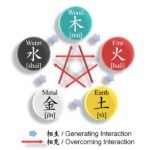
- Unveiling the Past and Present of Saju: The Art of Korean Fortune TellingIntroduction to Saju Saju, a traditional Korean fortune-telling practice, is an intricate art that seeks to interpret an individual’s fate based on their birth date and time. The term “Saju” translates to “four pillars” in English, referring to the four critical components derived from these time markers: year, month, day, and hour. This method holds significant cultural value within South… Read more: Unveiling the Past and Present of Saju: The Art of Korean Fortune Telling



![[link]](https://i.redd.it/x54x4tyhri5g1.jpeg)