
South Korea has secured a sweeping victory in its decades-long dispute with Lone Star Funds after an international tribunal annulled a 2022 ruling that had ordered Seoul to pay more than $230 million to the Dallas-based private equity firm.
The latest decision, issued by an annulment committee at the International Centre for Settlement of Investment Disputes (ICSID), wipes out the Korean government’s liability and stands as one of the rarest outcomes in investor-state arbitration.
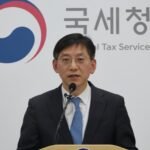
Prime Minister Kim Min-seok announced on Tuesday in Seoul that the ruling was delivered early Monday morning, Washington time, completely canceling the previous award, including interest.
The tribunal also directed Lone Star to reimburse the Korean government 7.3 billion won ($5 million) in legal fees within 30 days.
“With today’s decision, the government’s entire compensation obligation, roughly 400 billion won at current exchange rates, has been eliminated,” Kim said.
A RARE OVERTURNING OF AN ICSID AWARD
Full annulments at ICSID are exceptionally unusual. Since 1972, the tribunal has issued more than 500 awards, of which only 25 have been annulled and just eight, including Korea’s case, have been voided in their entirety.
Fewer than 2% of all ICSID rulings have ever been fully overturned.

The result strengthens Seoul’s leverage should Lone Star attempt a new arbitration, said legal experts.
“The chances of winning a full annulment were extremely slim,” said one international arbitration lawyer. “For Lone Star, restarting a case involving events from 15 to 20 years ago would require a smoking gun, which is extraordinarily unlikely to be unearthed now.”
THE GLOBAL FINANCIAL MELTDOWN HITS
Lone Star first entered Korea in 2003, buying Korea Exchange Bank (KEB), now renamed to Hana Bank, for 1.38 trillion won. Four years later, it struck a deal to sell the lender to HSBC for about $6.3 billion, a price that would have yielded more than five times its original investment.
But Korean regulators postponed their review of the sale, citing Lone Star’s criminal trial over alleged stock-price manipulation at a KEB credit-card subsidiary.
By the time officials were ready to proceed, the 2007-08 global financial crisis had taken hold, and HSBC withdrew its offer in September 2008.

In 2012, Lone Star sold its KEB stake to Hana Financial Group for 3.92 trillion won, roughly half the price HSBC had agreed to pay.
The private equity firm claimed the delay amounted to improper state interference and filed an ICSID claim that year seeking $4.7 billion in damages.
After ten years of hearings, ICSID ruled in 2022 that Korea should pay $216 million, just 4.6% of the amount Lone Star demanded, plus interest.
The drastically reduced compensation prompted challenges from both sides.
Lone Star argued the award was far too low, while the Korean government sought annulment next year on grounds that the tribunal exceeded its authority and committed procedural errors.
THE HSBC DEAL AT THE HEART OF THE DISPUTE
The failed HSBC sale became the centerpiece of Lone Star’s claim.
The US fund insisted that regulatory delays derailed a highly profitable exit that would have generated returns far above those realized from the 2012 sale.

Seoul countered that HSBC’s withdrawal stemmed from market turmoil during the global financial crisis, rather than from the government’s review process.
ICSID’s 2022 ruling acknowledged part of Lone Star’s argument but drastically scaled down the damages. That partial award has now been nullified in full.
WHAT HAPPENS NEXT?
Lone Star could initiate a new arbitration or seek a negotiated settlement.
But the annulment sharply narrows its path. Any fresh claim would hinge on facts already scrutinized for more than a decade, with limited room for new evidence or revised arguments.
Legal experts say the ruling places Seoul in a far stronger position going forward.
With the earlier award erased and litigation costs ordered back to the government, Lone Star may be more inclined to explore a settlement rather than embark on another protracted battle, legal experts project.