
Yeo Han-gu (right), chief negotiator of the Ministry of Trade, Industry and Resources’ Trade Negotiation Headquarters, and Jamieson Greer, U.S. Trade Representative (Photo courtesy of the Ministry of Trade, Industry and Resources)
The Korea-U.S. Free Trade Agreement (FTA) Joint Committee meeting, which Korea and the United States were pursuing as a follow-up measure to tariff negotiations, has been postponed to early next year due to U.S. dissatisfaction with Korea’s push for digital-related regulations, according to U.S. media reports.
According to Politico, a U.S. political media outlet, on Dec. 19 (local time), the U.S. Trade Representative (USTR) canceled the closed-door FTA Joint Committee meeting that was scheduled for the previous day.
Citing three sources, the report attributed the cancellation to “Seoul’s (Korea’s) pursuit of digital proposals that the Donald Trump administration deems discriminatory.”
One source said, “The U.S. administration believes Korea is not keeping its promises on several priority issues, including the digital sector.”
Another source told Politico that the meeting was postponed to early next year due to “several views and differences of opinion” regarding digital policy, and that the postponement reflects both sides’ acknowledgment that one meeting would not provide sufficient time to resolve these differences.
The digital regulations Korea is pursuing that concern the United States appear to be legislative efforts such as the Online Platform Act aimed at preventing monopolistic abuses by big tech companies.
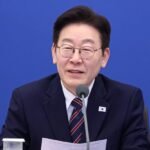
The Online Platform Act, which is also a campaign promise of President Lee Jae-myung, faces opposition not only from the U.S. business community but also from Congress.
If, as the Politico report suggests, the USTR abruptly canceled the meeting citing Korea’s push for digital regulations as the reason, this would indicate that even the Trump administration is joining in pressuring Korea.
Previously, when the European Union (EU) recently imposed a fine of 120 million euros (approximately 205.9 billion won) on X based on the Digital Services Act (DSA) and launched investigations into Meta Platform, Google, and Apple, targeting U.S. big tech companies, the USTR warned of “corresponding measures” on Dec.16 and stated that it would “take a similar approach to other countries pursuing EU-style strategies.”
However, it is understood that the Korean government’s position is that this postponement of the FTA Joint Committee was agreed upon during the process of coordinating agendas between Korea and the U.S. in advance.
Earlier, Yeo Han-gu, chief negotiator of the Ministry of Trade, Industry and Resources’ Trade Negotiation Headquarters, said at a press briefing on Dec. 17 (Korea time), “We originally planned to hold it within this year, but both sides thought we needed more time for detailed aspects, so we are discussing the schedule for early next year and constructively discussing the detailed parts.”
Meanwhile, regarding some reports that the USTR’s postponement of the FTA Joint Committee was due to Korea’s pressure on Coupang, a U.S.-listed company, an official knowledgeable about this matter told Yonhap News, “The decision to postpone the Korea-U.S. FTA Joint Committee during negotiations with the USTR is unrelated to the recent Coupang information leak incident.”
Coupang, the top domestic e-commerce market company, recently faced government investigation and police inquiry following a large-scale leak incident, and the National Assembly’s Committee on Science, ICT, Broadcasting and Communications summoned Coupang executives on Dec. 2 to severely criticize their inadequate response to the leak situation.