GENEVA – Since the 2008 global financial crisis, industrial policy has crept back into respectable economic discourse, after decades of being derided as misguided interventionism, particularly for developing countries. But its renaissance is being led by the advanced economies that once rejected it, with the push into AI and renewable energy hastening the shift. For developing countries, this revival presents new opportunities, provided that they can manage three major constraints: a weak enabling environment (a lack of infrastructure and other necessary inputs), limited autonomy in policy-making, and fiscal constraints. Industrial policy is often understood in terms of subsidies and tax breaks, but for many developing economies, far more than these instruments must be put in place. Without reliable digital connectivity, dependable power supplies, trusted data-protection regimes, and a skilled workforce, ambitions for AI-led growth will amount to little more than rhetoric. Developing countries’ policy options are also constrained, because World Trade Organization (WTO) rules limit
How developing countries can make the most of AI
in News
Related Posts
Latest News from Korea
- Korea’s inheritance taxes get blame for world’s 4th-largest millionaire exodus
 Korea has emerged as one of the countries experiencing the world’s largest outflow of wealthy individuals, in part due to its rigid inheritance tax system. A recent analysis by British consultancy Henley & Partners showed Tuesday that the net outflow of Korean millionaires last year was estimated at 2,400, double the 1,200 recorded in 2024. The figure was the fourth… Read more: Korea’s inheritance taxes get blame for world’s 4th-largest millionaire exodus
 - The rebel returns: Lee Kun-yong and art of letting body speakThe pairing of slicked-back white hair and a childlike grin has rarely suited anyone as well as it does Lee Kun-yong. The 83-year-old sat in his Seoul home on a wintry January afternoon, leafing through memories that stretched back more than half a century. Our meeting came just a week before the opening of his latest solo exhibition at Pace… Read more: The rebel returns: Lee Kun-yong and art of letting body speak
- CJ Olive Young partners with Polish firm to sell PB products in EuropeCJ Olive Young, the retail and distribution arm of Korea’s CJ Group, said Tuesday it has partnered with a Polish company to export its private brand (PB) products to Europe. The company said it has signed an agreement with Poland-based cosmetics distributor Gabona to sell its PB cosmetics products through offline retail outlets across Europe. Gabona, which distributes more than… Read more: CJ Olive Young partners with Polish firm to sell PB products in Europe
- Global security outlook for 2026: Back to the jungle?This year has dawned with a thunderbolt-like U.S. operation to capture Venezuelan President Nicolas Maduro in Caracas. Its aftershocks are still being felt. U.S President Donald Trump is ramping up pressure not only against the leaders of states like Cuba and Iran, but also toward NATO allies. His doctrine makes many leaders across the world nervous about its ramifications, anguishing… Read more: Global security outlook for 2026: Back to the jungle?
- Seoul to deploy robots to improve disaster managementSeoul Metropolitan Fire and Disaster Headquarters announced on Monday that it will use robots and new technologies such as artificial intelligence (AI) more proactively to address problems and improve its emergency response system. A key initiative under the plan is to expand the number of traditional markets covered by its fire patrol robots from two to four. These robots will… Read more: Seoul to deploy robots to improve disaster management


Latest Entertainment from Korea
- LE’V Steps Into the Light: “Spotlight Soul” Captures the Artistry, Growth, and Glow of a New Era in the 2026 Season’s Greetings CollectionPhoto Credits: CHROMOSOME LE’V Illuminates 2026 with “Spotlight Soul” LE’V enters 2026 with a statement that feels both cinematic and deeply personal. His Season’s Greetings “Spotlight Soul” concept photos reveal a striking evolution — one that merges emotional depth with artistic clarity. The project, released as a collector’s visual experience, celebrates not just another year but LE’V’s firm grasp on identity, craft,… Read more: LE’V Steps Into the Light: “Spotlight Soul” Captures the Artistry, Growth, and Glow of a New Era in the 2026 Season’s Greetings Collection
- KiiiKiii Leesol & Haum Illuminate SPUR x Dior Addict’s January 2026 Issue with Daring Light, Sensual Motion, and New Beauty CodesPhoto Credits: SPUR Dior Starship Entertainment A New Year, A New Iconic Pairing SPUR Magazine opens 2026 with a collaboration that feels both intimate and electric. The January 2026 Issue Pictorial Preview showcases KiiiKiii Leesol and Haum in a visual dialogue infused with Dior Addict’s luminous rebellion. Titled “Light Moves: The Addict State of Mind”, the spread captures the interplay of motion, reflection, and self-definition—a signal… Read more: KiiiKiii Leesol & Haum Illuminate SPUR x Dior Addict’s January 2026 Issue with Daring Light, Sensual Motion, and New Beauty Codes
- Breaking Boundaries: ifeye × KITTO Taiwan Redefine Visual Storytelling in the January 2026 Pictorial — A Fusion of Innovation & IdentityPhoto Credits: Hi-Hat Entertainment The Convergence of Vision and Identity The January 2026 Pictorial from ifeye × KITTO Taiwan marks a defining moment in East Asian creative media. Framed as both a celebration and an evolution, the collaboration bridges art direction, fashion narrative, and technological fluidity to capture a new generation’s pulse. More than a photoshoot, this issue acts as a visual manifesto—an exploration of… Read more: Breaking Boundaries: ifeye × KITTO Taiwan Redefine Visual Storytelling in the January 2026 Pictorial — A Fusion of Innovation & Identity
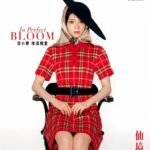
- Xiaoting in Full Bloom: Kep1er’s Shining Star Redefines Power, Grace, and Global Glamour in Wonderland China’s January 2026 Cover StoryPhoto Credits: KLAP ENTERTAINMENT Kep1er’s Xiaoting Captures the Moment Kep1er’s Shen Xiaoting steps into 2026 as a muse of modern elegance, fronting the January 2026 Wonderland China cover with an aura that’s both futuristic and fiercely grounded. As one of the brightest stars of her generation, Xiaoting embodies the balance between aspiration and artistry that defines global pop’s next chapter. “Confidence is not just… Read more: Xiaoting in Full Bloom: Kep1er’s Shining Star Redefines Power, Grace, and Global Glamour in Wonderland China’s January 2026 Cover Story
- BTS’s V Radiates Timeless Charisma in GQ Korea x Cartier’s February 2026 Cover: A Monument to Modern Elegance and Emotional PrecisionPhoto Credits: GQ Korea – Cartier – BigHit Music. – BTS V x Cartier: The Sound of Stillness and Strength For GQ Korea’s February 2026 issue, the cover unfolds like a cinematic confession. BTS’s V (Kim Taehyung)—known for his magnetic duality of mystery and warmth—joins forces with Cartier, the house synonymous with precision, artistry, and legacy. Together, they create a visual symphony that celebrates… Read more: BTS’s V Radiates Timeless Charisma in GQ Korea x Cartier’s February 2026 Cover: A Monument to Modern Elegance and Emotional Precision



Learn People & History of Korea
- The Evolution of Busan: A Historical Journey Through South Korea’s Second Largest Metropolitan CityAncient Beginnings: The Founding of Busan Busan, known as the second largest metropolitan city in South Korea, has a rich history that dates back to ancient times. The earliest recorded existence of Busan can be traced to the Goryeo Dynasty, where it was referenced as a vital coastal settlement. Its strategic location along the southeastern coast of the Korean Peninsula… Read more: The Evolution of Busan: A Historical Journey Through South Korea’s Second Largest Metropolitan City
- The Evolution of Pyongyang: A Journey Through History, Economy, and Political DynamicsIntroduction to Pyongyang Pyongyang, the capital city of North Korea, serves as a prominent symbol of the nation’s history and culture. Geographically located on the banks of the Taedong River, in the southwest part of the country, Pyongyang is situated within a strategic area that has historically facilitated trade and cultural exchange. The city’s origins can be traced back to… Read more: The Evolution of Pyongyang: A Journey Through History, Economy, and Political Dynamics
- The Evolution of Seoul: From Ancient Korea to Modern Metropolis and BeyondAncient Beginnings: The Founding of Seoul The city of Seoul, known today as the vibrant capital of South Korea, has ancient roots that trace back to the Three Kingdoms period of Korea, specifically the kingdoms of Baekje and Silla. Evidence suggests that Seoul was originally established as a settlement given its strategic geographical advantages. Nestled within the Han River basin,… Read more: The Evolution of Seoul: From Ancient Korea to Modern Metropolis and Beyond
- Exploring Korean Traditional Games in Squid Game: From Season 2 to Upcoming Season 3Introduction to Korean Traditional Games Korean traditional games have long been an integral part of the country’s cultural landscape, offering more than mere entertainment. These games, which range from simple children’s pastimes to complex community activities, hold significant cultural significance and often serve as a means of preserving history and promoting social interaction. Rooted in centuries of tradition, these games… Read more: Exploring Korean Traditional Games in Squid Game: From Season 2 to Upcoming Season 3
- Unveiling the Past and Present of Saju: The Art of Korean Fortune TellingIntroduction to Saju Saju, a traditional Korean fortune-telling practice, is an intricate art that seeks to interpret an individual’s fate based on their birth date and time. The term “Saju” translates to “four pillars” in English, referring to the four critical components derived from these time markers: year, month, day, and hour. This method holds significant cultural value within South… Read more: Unveiling the Past and Present of Saju: The Art of Korean Fortune Telling