 |
The government has decided to provide tax-exempt benefits to investors who sell their overseas stocks and reinvest the proceeds into Korean stocks by introducing a “Reshoring Investment Account (RIA).” On Dec. 24, the Ministry of Economy and Finance (MOEF) unveiled a package of tax support measures for domestic investment and foreign exchange market stabilization, introducing a new capital gains tax reduction scheme for overseas stock sales. The government has decided to exempt capital gains taxes of up to 50 million won (approximately $34,151) on overseas stock sales for investors who sell foreign equities and reinvest the proceeds into domestic stocks, as part of efforts to stabilize the surging exchange rate. It also announced plans to exempt domestic taxes on dividends received by South Korean parent companies from their overseas subsidiaries. Under the plan, investors who held overseas stocks as of Dec. 23, sell them, convert the proceeds into won, reinvest in domestic equities, and hold those investments for at least one year will be eligible for tax benefits. Capital gains generated on sales of up to 50 million won per person will be exempt from taxation. However, the level of tax relief will vary depending on the timing of reinvestment into domestic stocks. Investors who return to the domestic market in the first quarter of next year, between January and March, will receive a 100% exemption on calculated capital gains tax. Those returning in the second quarter, from April to June, will receive an 80% exemption, while those returning in the second half of the year, from July to December, will be eligible for a 50% exemption. The structure is designed to encourage faster dollar selling and won buying by offering greater tax savings for earlier repatriation. The government also announced plans to raise the dividend income exclusion ratio applied to dividends received by domestic parent companies from overseas subsidiaries to 100%, up from the current 95%. Previously, the remaining 5% of such dividends was subject to additional domestic taxation, but the revision will eliminate the tax burden entirely when overseas earnings are brought back to South Korea. The expanded exclusion ratio will apply to dividends paid on or after Jan. 1 next year. The government said it will swiftly pursue legislative amendments to the Restriction of Special Taxation Act to support expanded domestic investment and stabilize the foreign exchange market. In addition, the government said it will support major securities firms in quickly launching forward-exchange selling products for retail investors. The move is expected to expand the range of foreign exchange risk management tools available to individual investors. The government also plans to grant capital gains tax benefits when individual investors hedge currency risk on overseas stock holdings through forward-exchange contracts. If investors hedge currency risk on overseas stocks held as of Dec. 23 this year, they will be eligible for additional income deductions within certain limits. The recognized hedging limit is set at an average annual balance of 100 million won per individual, and 5% of the amount invested in hedging products will be additionally deductible when calculating overseas stock capital gains tax, with a maximum deduction of 5 million won. This will allow individual investors to reduce potential exchange-rate losses from future currency declines without directly selling their overseas stock holdings. submitted by /u/Substantial-Owl8342 |
Related Posts
Latest News from Korea
- Keytruda Insurance Coverage Expands to 13 Cancer Types
 Keytruda, a global blockbuster immunotherapy, recorded sales of 11 trillion won in the second quarter alone this year (Captured from MSD website) The health insurance coverage for the blockbuster immunotherapy drug Keytruda has expanded to a total of 13 cancer types, adding 9 cancers including gastric cancer and breast cancer to the existing 4 cancers such as non-small cell lung cancer. This… Read more: Keytruda Insurance Coverage Expands to 13 Cancer Types
 - FKI Proposes Stock Gift Cards to Boost KOSPI to 5,000 PointsThe Federation of Korean Industries (FKI) announced on Dec. 23 that it had proposed to the Office for Government Policy Coordination an idea to enable domestic stocks listed on the KOSPI and KOSDAQ markets to be made into gift cards and given as presents. Stock gift cards are a new concept financial investment service that issues domestic listed stocks in… Read more: FKI Proposes Stock Gift Cards to Boost KOSPI to 5,000 Points
- Samsung Electronics Acquires ZF’s ADAS Business for 1.5 Billion EurosThe “Ready” digital cockpit for vehicles, jointly developed by Samsung Electronics and Harman (Photo courtesy of Samsung Electronics) Samsung Electronics will acquire the advanced driver assistance systems (ADAS) business of ZF Friedrichshafen, the world’s second-largest automotive parts company, for approximately 1.5 billion euros (approximately 2.6 trillion won) through its subsidiary Harman. Harman, the world’s No. 1 supplier of automotive digital… Read more: Samsung Electronics Acquires ZF’s ADAS Business for 1.5 Billion Euros
- 산림청, 입목벌채 규제 완화 산불 피해 예방산림청은 제55차 국무회의에서 건축물과 인접해 산불 발생 시 피해를 줄 우려가 있는 입목에 대해서는 허가‧신고 없이 임의로 벌채가 가능하도록 하는 내용을 담은 ‘산림자원법 시행령’ 개정령안이 통과됐다고 23일 밝혔다. 2025년 영남 대형산불 시 건축물 3,878채가 소실되는 등 피해가 있어 산불피해 예방을 위해 건축물과 인접한 나무에 대한 제거 필요성이 제기됐다. 산불 피해 예방을 위한 화암사 건축물 주변 입목 벌채 사례 다만, 현행… Read more: 산림청, 입목벌채 규제 완화 산불 피해 예방
- LS Cable Counters Keystone’s Put Option LawsuitLS Tower exterior view LS Cable announced on Dec. 23 that it has filed a counter-lawsuit to clarify rights and obligations under the investment agreement in relation to the put option (purchase claim right) performance lawsuit filed by private equity fund Keystone Partners regarding LS EV Korea (hereinafter LSEVK). This counter-lawsuit seeks confirmation of “LS Cable’s non-responsibility for the failed listing” and… Read more: LS Cable Counters Keystone’s Put Option Lawsuit



Latest Entertainment from Korea
- BTOB’s Lee Changsub Captivates in Arena Homme+ Korea January 2026: Elegance, Emotion, and Artistic Evolution in FocusPhoto Credits: Arena Homme+ Korea. BTOB Company BTOB’s Lee Changsub: A New Chapter of Refined Expression Arena Homme+ Korea’s January 2026 issue unveils a striking pictorial of Lee Changsub, the powerhouse vocalist of BTOB, revealing a new layer of depth in artistry and maturity. Known for his soulful tone and commanding stage presence, Changsub transitions effortlessly into fashion’s high-concept sphere—unfolding charisma that… Read more: BTOB’s Lee Changsub Captivates in Arena Homme+ Korea January 2026: Elegance, Emotion, and Artistic Evolution in Focus
- Fre Naz, DJ Tiz : Deori-DeollongI will always be a fan of combining Korean traditional music with modern genres. There are many opportunities to create something that’s inspired by both worlds. Fre Naz and DJ Tiz accomplish this on Deori-Deollong. The four-song EP reinterprets folk songs with hip-hop. “Geomundo Boat Song” uses the folk song melody and supports it with hip-hop. It sounds perfectly natural… Read more: Fre Naz, DJ Tiz : Deori-Deollong
- INTHE X Shines in DAZED Korea’s January 2026 Pictorial: A New Era for K-pop Boy GroupsPhoto Credits: DAZED Korea iNKODE INTHE X, the much-anticipated 10-member project boy group under iNKODE, has officially previewed their debut with a striking pictorial in the January 2026 issue of DAZED Korea. The group, featuring Masato, Taehwan, Sen, Sun Jiayang, Peng Jinyu, Hyunmin, Sena, Teru, Mano, and Rukia, brings together a diverse lineup of trainees, many of whom already boast… Read more: INTHE X Shines in DAZED Korea’s January 2026 Pictorial: A New Era for K-pop Boy Groups
- STAYC’s Yoon Shines in GQ Korea’s January 2026 Issue: A High-Fashion Editorial BreakdownPhoto Credits: GQ Korea High Up Entertainment STAYC’s Yoon has stepped into the spotlight of GQ Korea’s January 2026 issue, delivering a striking editorial that marries dreamy sophistication with a Gen Z edge. The pictorial, shot by photographer Yoon Ji Yong and styled by Lee Jong Hyun, captures Yoon in a series of transformative looks that highlight her evolving style… Read more: STAYC’s Yoon Shines in GQ Korea’s January 2026 Issue: A High-Fashion Editorial Breakdown
- Han Yujin’s Allure Korea Cover: The Art of Modern Luxury in December 2025Photo Credits: Allure Korea WAKEONE Management Han Yujin, the magnetic presence of ZEROBASEONE, has once again captivated the fashion world as the cover star of Allure Korea’s December 2025 digital issue. This feature is more than just a magazine spread—it’s a statement of Yujin’s evolving artistry and her place at the intersection of K-pop and high fashion. With a background… Read more: Han Yujin’s Allure Korea Cover: The Art of Modern Luxury in December 2025




Learn People & History of Korea
- The Evolution of Busan: A Historical Journey Through South Korea’s Second Largest Metropolitan CityAncient Beginnings: The Founding of Busan Busan, known as the second largest metropolitan city in South Korea, has a rich history that dates back to ancient times. The earliest recorded existence of Busan can be traced to the Goryeo Dynasty, where it was referenced as a vital coastal settlement. Its strategic location along the southeastern coast of the Korean Peninsula… Read more: The Evolution of Busan: A Historical Journey Through South Korea’s Second Largest Metropolitan City
- The Evolution of Pyongyang: A Journey Through History, Economy, and Political DynamicsIntroduction to Pyongyang Pyongyang, the capital city of North Korea, serves as a prominent symbol of the nation’s history and culture. Geographically located on the banks of the Taedong River, in the southwest part of the country, Pyongyang is situated within a strategic area that has historically facilitated trade and cultural exchange. The city’s origins can be traced back to… Read more: The Evolution of Pyongyang: A Journey Through History, Economy, and Political Dynamics
- The Evolution of Seoul: From Ancient Korea to Modern Metropolis and BeyondAncient Beginnings: The Founding of Seoul The city of Seoul, known today as the vibrant capital of South Korea, has ancient roots that trace back to the Three Kingdoms period of Korea, specifically the kingdoms of Baekje and Silla. Evidence suggests that Seoul was originally established as a settlement given its strategic geographical advantages. Nestled within the Han River basin,… Read more: The Evolution of Seoul: From Ancient Korea to Modern Metropolis and Beyond
- Exploring Korean Traditional Games in Squid Game: From Season 2 to Upcoming Season 3Introduction to Korean Traditional Games Korean traditional games have long been an integral part of the country’s cultural landscape, offering more than mere entertainment. These games, which range from simple children’s pastimes to complex community activities, hold significant cultural significance and often serve as a means of preserving history and promoting social interaction. Rooted in centuries of tradition, these games… Read more: Exploring Korean Traditional Games in Squid Game: From Season 2 to Upcoming Season 3
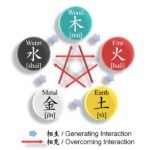
- Unveiling the Past and Present of Saju: The Art of Korean Fortune TellingIntroduction to Saju Saju, a traditional Korean fortune-telling practice, is an intricate art that seeks to interpret an individual’s fate based on their birth date and time. The term “Saju” translates to “four pillars” in English, referring to the four critical components derived from these time markers: year, month, day, and hour. This method holds significant cultural value within South… Read more: Unveiling the Past and Present of Saju: The Art of Korean Fortune Telling