Note: Quotes Google translated. The site is old, marked as insecure by Chrome, and you’ll have to zoom in the microscopic font.
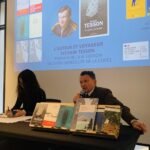
http://gugakcd.kr/music_detail.asp?cd_num=CKJCD-010-A
It also has the actual image of the students referenced by the teaser images of BTS in suits.
The title quote is the most important thing I saw that’s not already in the the viral WETA article (which is based on this research).
Changkwan Jung runs the site. He made the CD version of the cylinders that WETA links to on Jung’s Youtube. He got access from the Library of Congress which owns the cylinders, via the leading expert Robert Provine (whose degrees are all from Harvard). Jung isn’t selling CDs, he gave them away to promote research. Provine is the one who discovered the Washington Post article and corroborated the cylinders with the 7 students. Jung got grants through government programs, and but also put up his own money. Crazy quote that shows his dedication:
I would like to express my gratitude to my wife for understanding the financial burden of producing this series
I saw him described as head/belonging to various historical associations. It is a whole lot of reading with not a lot of interesting info other than where some of them are from in Korea. But the quote in my post title really struck me. But he did say he was disappointed not to hear back from organizations that he donated CDs to about any research they did. I think BTS will change that.
A little info on the students
“Ahn Jeong-sik [also translated as Jung Sik/Jong Sik], from a prominent family,” is one of the singers.
One expert describes their singing savagely:
Since the singers appear to have been laborers employed in the United States during the late Joseon Dynasty rather than professional musicians, their singing could not have been accurate.
[…]
since they are not music experts but ordinary people, it is unfortunate that the musical genres they can sing are limited to folk songs or music that was popular at the time,
This last part explains why they sang Swanee River, a hit minstrel song that was presumably popular even at Howard. Basically, they were asked to sing but didn’t know songs besides what’s then popular in US/Korea.
The same expert deciphered where the regional songs they recorded came from, and that it may have been heard through traveling singers in Korea. :
The second track is recorded as ‘Blooming Plum Tree Song’ sung by Ahn Jong-sik and is interpreted as ‘Maehwa Taryeong’. Although ‘Maehwa Taryeong’ is currently known only for being sung by renowned Gyeonggi folk singers, at the time, traveling troupes (Sadangpae) toured the country and frequently performed the song; therefore, it appears that the singer likely learned it by listening to a Sadangpae from the southern region. The melody shares many similarities with the ‘Maehwa Taryeong’ sung today.
Because Jong Sik is not from that region:
Ahn Jong Sik appears to be from Namdo, judging by the presence of the Yukjabaegi melody, while Lee Hee-cheol is presumed to be from Gyeongseodo, judging by the strong presence of the Gyeongseodo melody.
This explains the message in the BTS promo, “what is your love song?”
Tracks 6, 7, and 8 are ‘Arirang’ sung by Ahn Jong-sik and Yang Son, and Ahn Jong-sik and Lee Hee-cheol, respectively, but are labeled as ‘Love Song: Ar-ra-rang’.
submitted by /u/hyeran_jainros_fc
[link] [comments]